Stellar Objects
Deep-sky Objects
Cygnus Loop
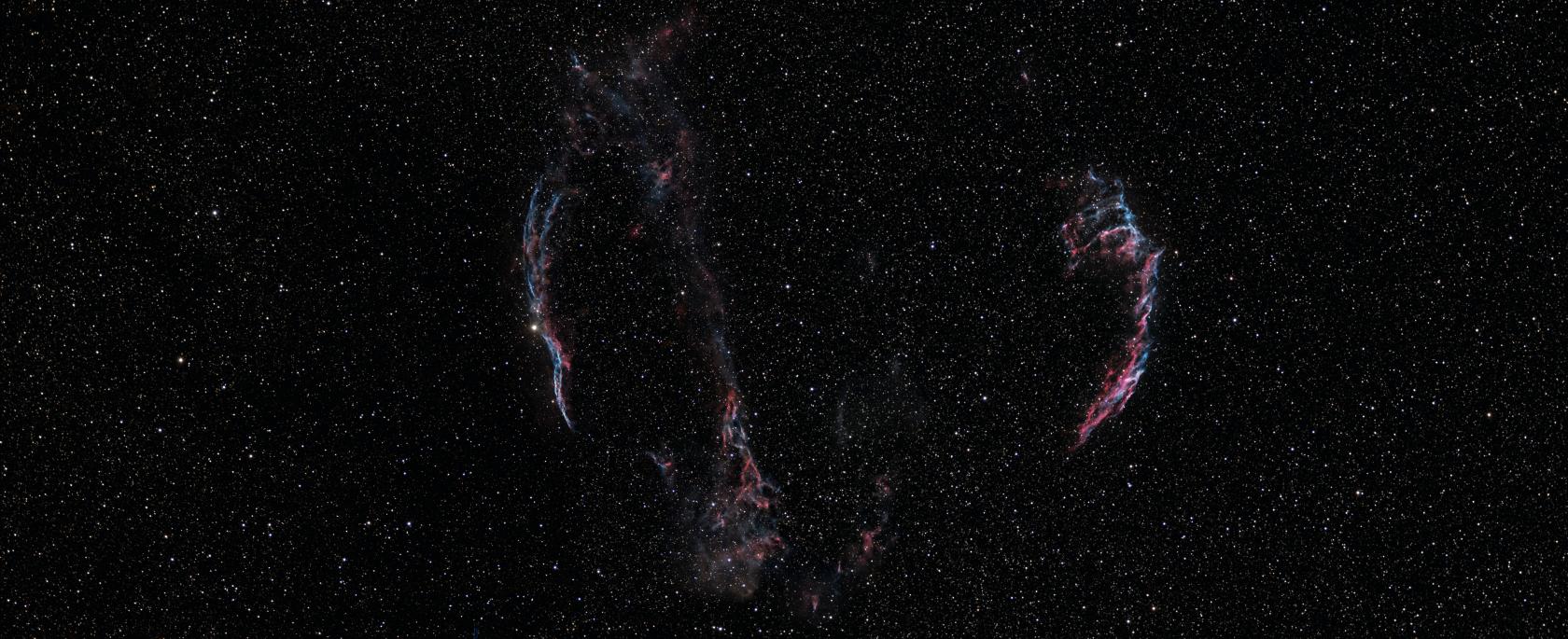
My best photo (mosaic) of the Cygnus Loop - Full resolution picture available on Telescopius
Details:
- Date: 28/Aug/2024
- Exposures: 202x2min Lights, 20x2min Darks
- ISO: 800
Equipment:
- Camera: Canon 6D
- Telescope: Svbony Apochromatic 80/448 mm SV503 80ED Doublet (0.8x reducer/flattener)
- Mount: EQ5 modified with Onstep
Description
The Cygnus Loop (radio source W78, or Sharpless 103) is a large supernova remnant (SNR) in the constellation Cygnus, an emission nebula measuring nearly 3° across. Some arcs of the loop, known collectively as the Veil Nebula or Cirrus Nebula, emit in the visible electromagnetic range. Radio, infrared, and X-ray images reveal the complete loop.
Find more information about the Cygnus Loop on Wikipedia
Personal Stats
First observation
📆 | 28/08/2022 |
📍 | Canadelo, Portugal |
Imaging sessions
Date | Bortle Class | Total Exposure Time |
28/8/2024 | Class 3 | 6h44min (202x2min) |
6/9/2025 | Class 5 | 50min (10x5min) |
19/8/2026 | Class 5 |
Captured media
Photographs
My best photo (mosaic) of the Cygnus Loop - Full resolution picture available on Telescopius
Details:
- Date: 28/Aug/2024
- Exposures: 202x2min Lights, 20x2min Darks
- ISO: 800
Equipment:
- Camera: Canon 6D
- Telescope: Svbony Apochromatic 80/448 mm SV503 80ED Doublet (0.8x reducer/flattener)
- Mount: EQ5 modified with Onstep
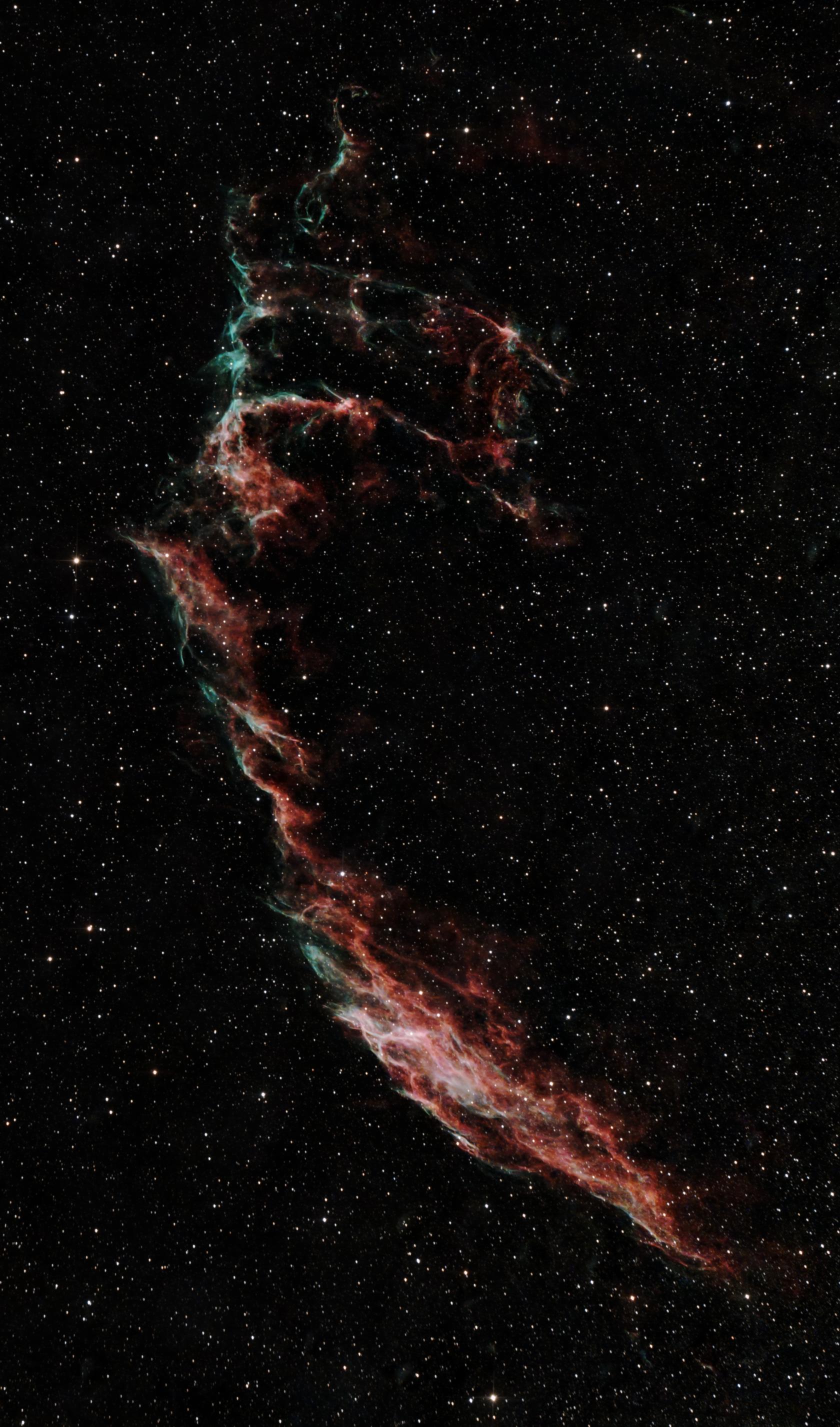
Full resolution picture available on Telescopius
Details:
- Date: 6/Sep/2025
- Exposures: 10x5min Lights, 3x5min Darks, 15x5s Flats, 15x5s Dark Flats
- Gain: 126
- Sensor Temperature: -10ºC
- Guiding: Yes
Equipment:
- Camera: ZWO ASI294MC Pro
- Filters: SVBONY SV260 Light pollution filter
- Telescope: Orion Newtonian 8"/790 mm N 203/790 (0.95x reducer/flattener)
- Mount: EQ6 modified with Onstep
|
|
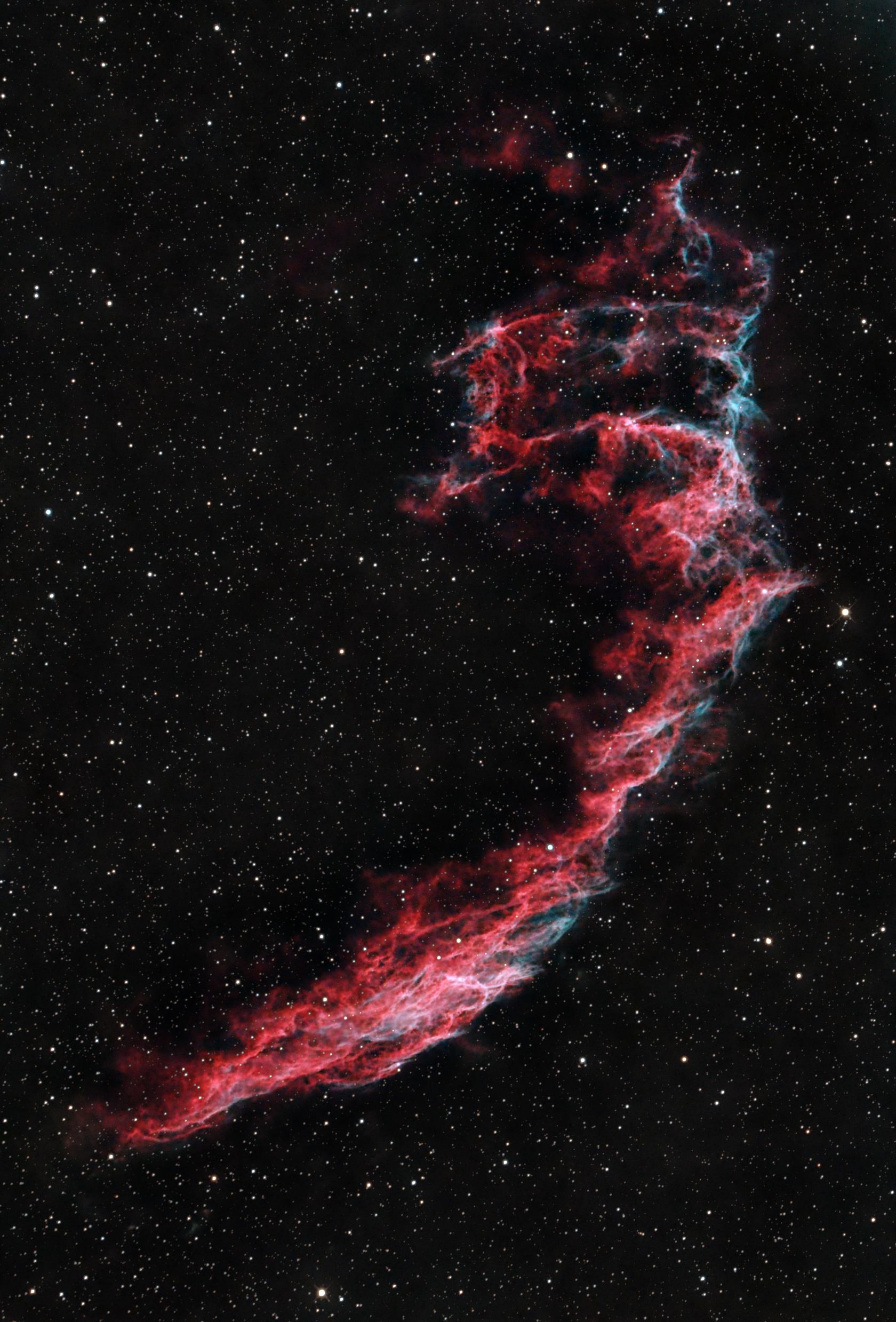
Full resolution picture available on Telescopius
Details:
- Date: 19/Aug/2026
- Exposures: 12x4min Lights, 5x4min Darks, 10x5s Flats, 10x5s Dark Flats
- Gain: 126
- Sensor Temperature: 5ºC
- Guiding: Yes
Equipment:
- Camera: ZWO ASI294MC Pro
- Filters: SVBONY SV260 Light pollution filter
- Telescope: Orion Newtonian 8"/790 mm N 203/790 (0.95x reducer/flattener)
- Mount: EQ6 modified with Onstep
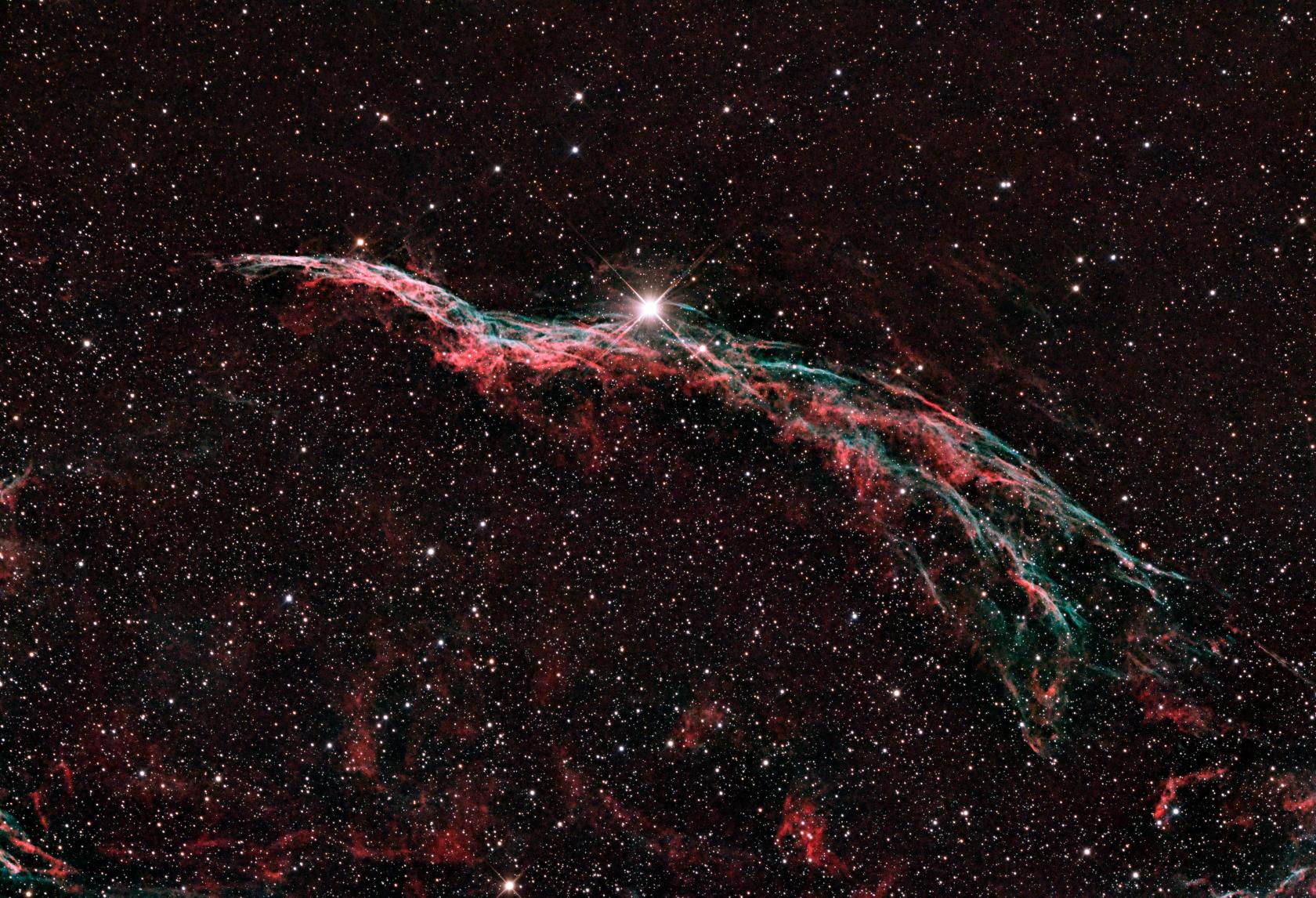
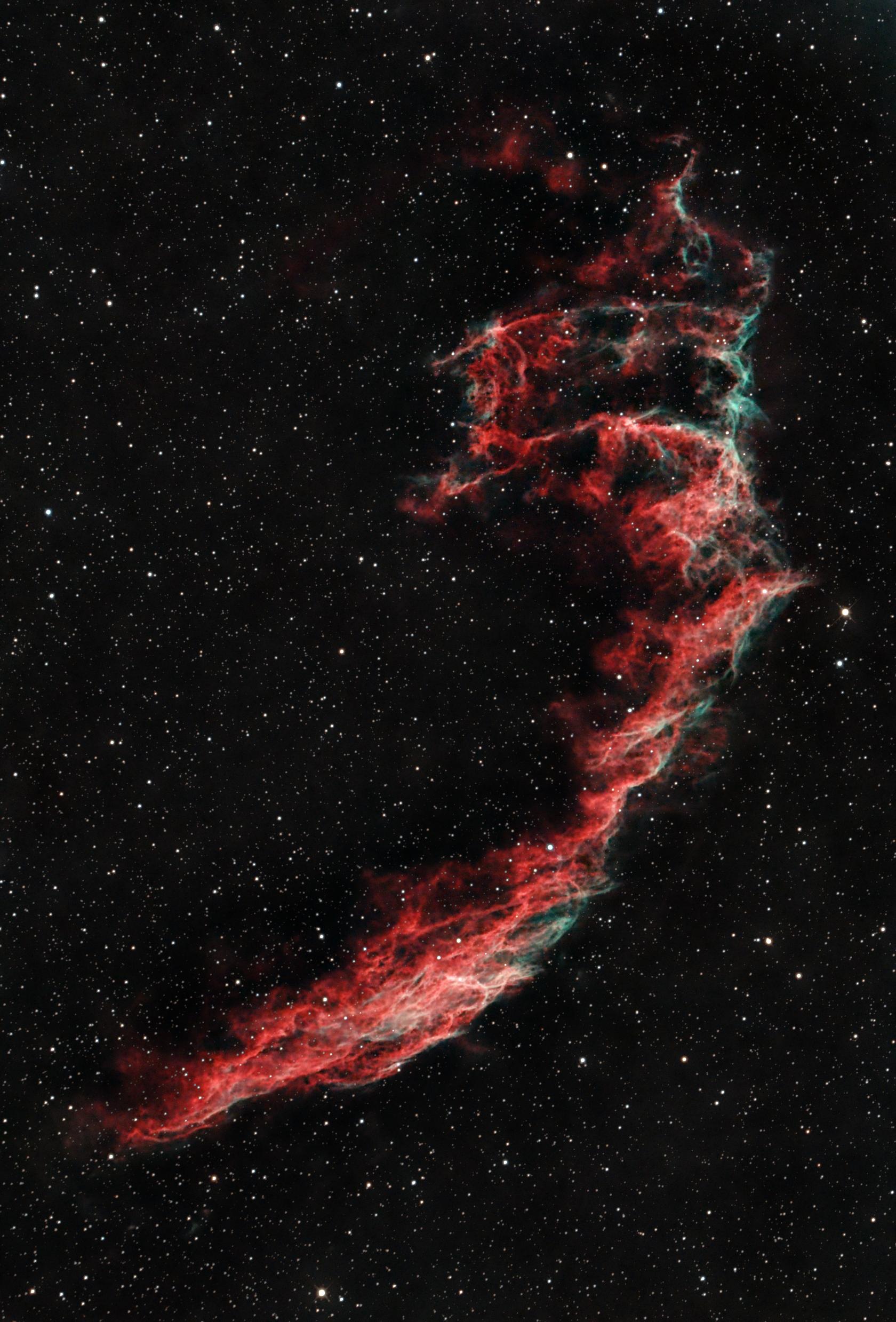
Full resolution picture available on Telescopius
Details:
- Date: 19/Aug/2026
- Exposures: 12x4min Lights, 5x4min Darks, 10x5s Flats, 10x5s Dark Flats
- Gain: 126
- Sensor Temperature: 5ºC
- Guiding: Yes
Equipment:
- Camera: ZWO ASI294MC Pro
- Filters: SVBONY SV260 Light pollution filter
- Telescope: Orion Newtonian 8"/790 mm N 203/790 (0.95x reducer/flattener)
- Mount: EQ6 modified with Onstep
Pacman Nebula / NGC281
NGC 281
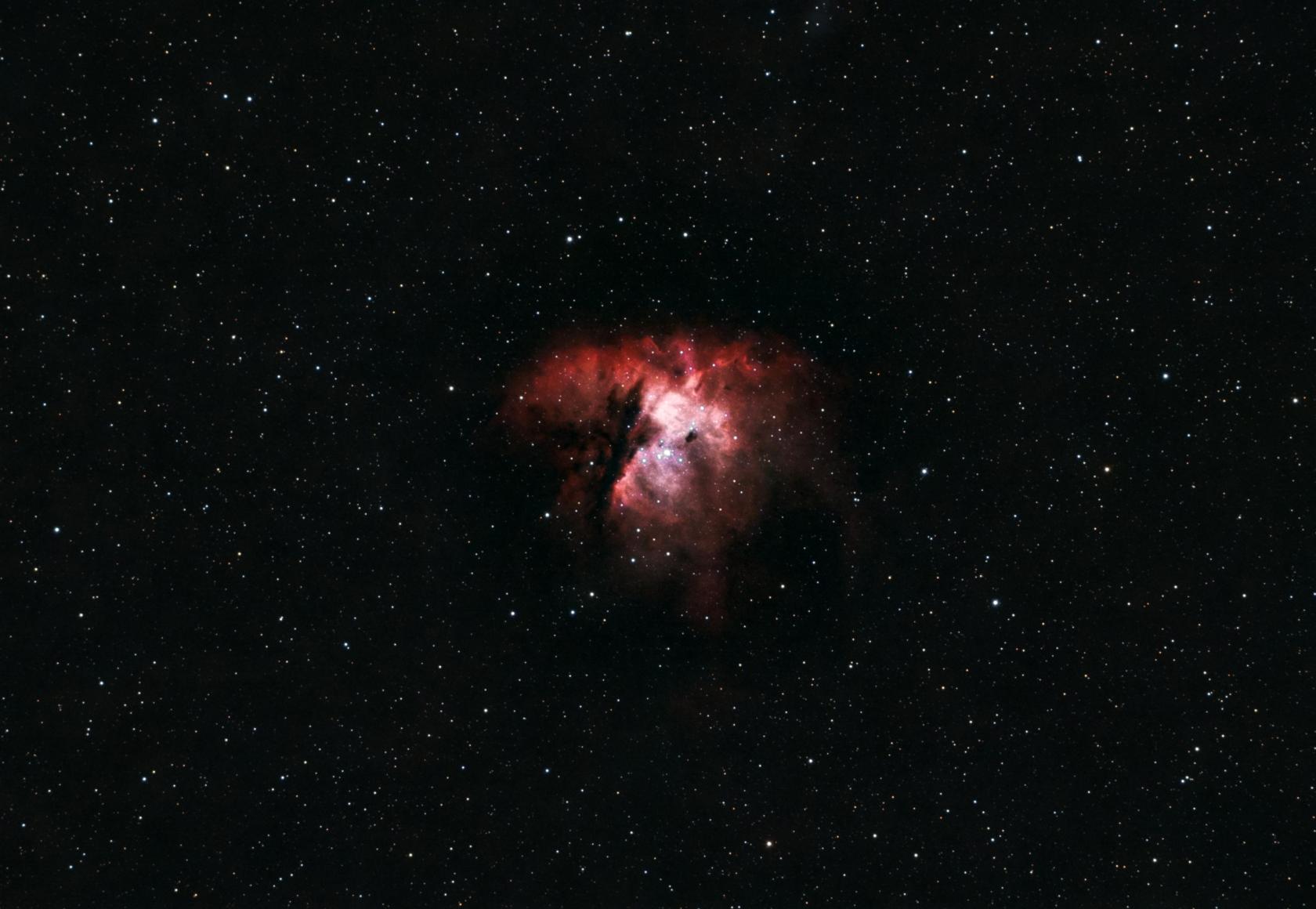
My best photo of the Pacman Nebula - Full resolution picture available on Telescopius
Details:
- Date: 26/Aug/2025
- Exposures: 10x5min Lights, 3x5min Darks
- Gain: 105 (doh!)
- Sensor Temperature: -10ºC
- Guiding: Yes
Equipment:
- Camera: ZWO ASI294MC Pro
- Filters: SVBONY SV260 Light pollution filter
- Telescope: Svbony Apochromatic 80/448 mm SV503 80ED Doublet (0.8x reducer/flattener)
- Mount: EQ5 modified with Onstep
Description
NGC 281, IC 11 or Sh2-184 is a bright emission nebula and part of an H II region in the northern constellation of Cassiopeia and is part of the Milky Way's Perseus Spiral Arm. This 20×30 arcmin sized nebulosity is also associated with open cluster IC 1590, several Bok globules and the multiple star, B 1. It collectively forms Sh2-184,[3] spanning over a larger area of 40 arcmin.[4] A recent distance from radio parallaxes of water masers at 22 GHz made during 2014 is estimated it lies 2.82±0.20 kpc (9200 ly) from us.[5] Colloquially, NGC 281 is also known as the Pacman Nebula for its resemblance to the video game character.
Find more information about the Pacman Nebula on Wikipedia
Personal Stats
First observation
📆 | 26/08/2025 |
📍 | Fontão Fundeiro, Portugal |
Imaging sessions
Date | Bortle Class | Total Exposure Time |
26/8/2025 | Class 4 | 50min (10x5min) |
Captured media
Photographs
My best photo of the Pacman Nebula - Full resolution picture available on Telescopius
Details:
- Date: 26/Aug/2025
- Exposures: 10x5min Lights, 3x5min Darks
- Gain: 105 (doh!)
- Sensor Temperature: -10ºC
- Guiding: Yes
Equipment:
- Camera: ZWO ASI294MC Pro
- Filters: SVBONY SV260 Light pollution filter
- Telescope: Svbony Apochromatic 80/448 mm SV503 80ED Doublet (0.8x reducer/flattener)
- Mount: EQ5 modified with Onstep
North-America Nebula / NGC 7000
NGC 7000
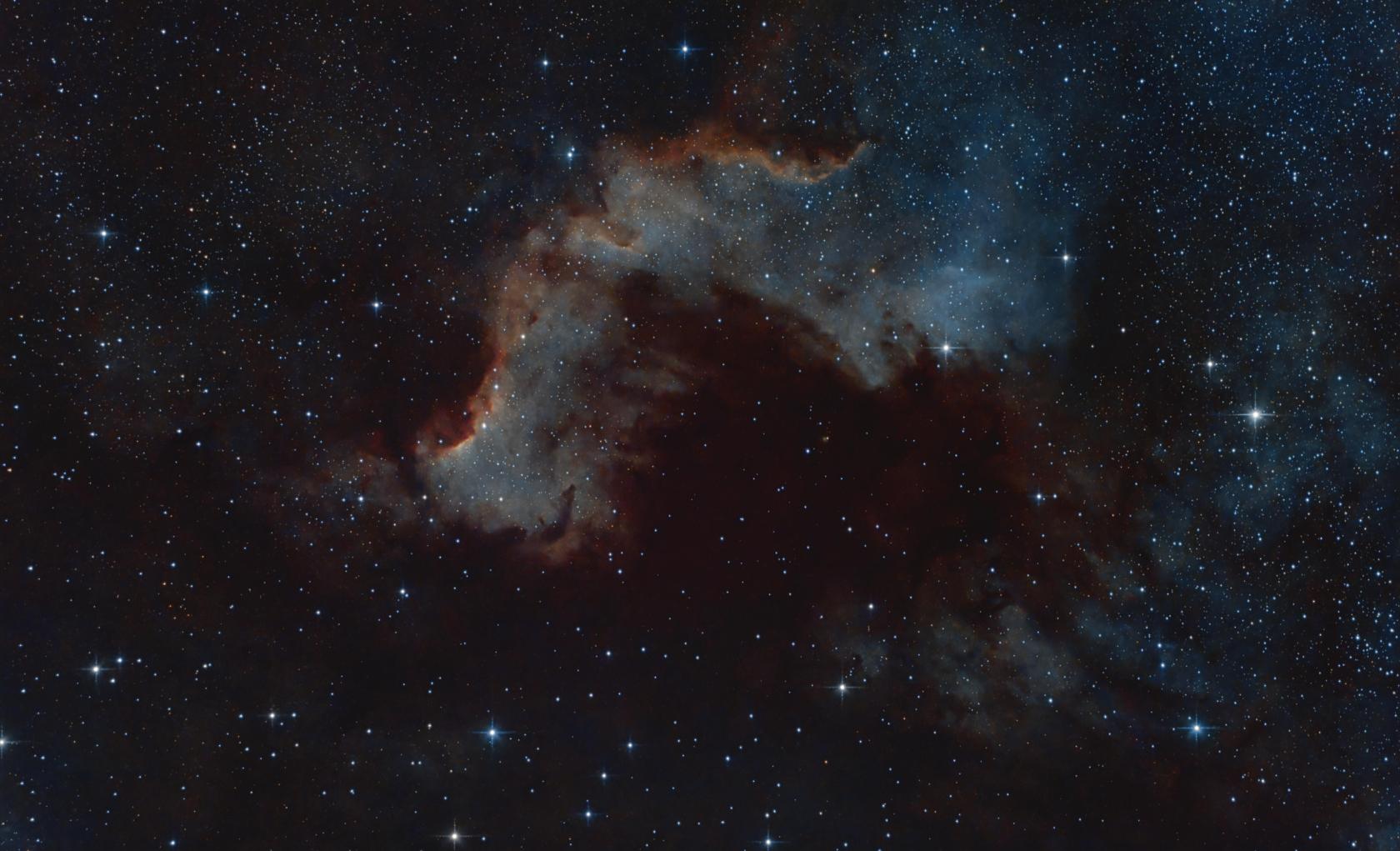
My best photo of the North America Nebula - Full resolution picture available on Telescopius
Details:
- Date: 7/Jun/2025
- Exposures: 27x1min Lights, 10x1min Darks
- ISO: 3200
- Guiding: Yes
Equipment:
- Camera: Canon 6D
- Filters: SVBONY SV206 Light pollution filter
- Telescope: Orion Newtonian 8"/790 mm N 203/790
- Mount: Equatorial Sky-Watcher EQ6 (Upgraded with OnStep)
Description
The North America Nebula (NGC 7000 or Caldwell 20) is an emission nebula in the constellation Cygnus, close to Deneb (the tail of the swan and its brightest star) in the night sky. It is named because its shape resembles North America.
Find more information about the North America Nebula on Wikipedia
Personal Stats
First observation
📆 | 16/08/2022 |
📍 | Santa Cruz, Portugal |
Imaging sessions
Date | Bortle Class | Total Exposure Time |
16/8/2022 | Class 5 | 50min (50x1min) |
7/6/2023 | Class 5 | 27min (27x1min) |
Captured media
Photographs
My best photo of the North America Nebula - Full resolution picture available on Telescopius
Details:
- Date: 7/Jun/2025
- Exposures: 27x1min Lights, 10x1min Darks
- ISO: 3200
- Guiding: Yes
Equipment:
- Camera: Canon 6D
- Filters: SVBONY SV206 Light pollution filter
- Telescope: Orion Newtonian 8"/790 mm N 203/790
- Mount: Equatorial Sky-Watcher EQ6 (Upgraded with OnStep)
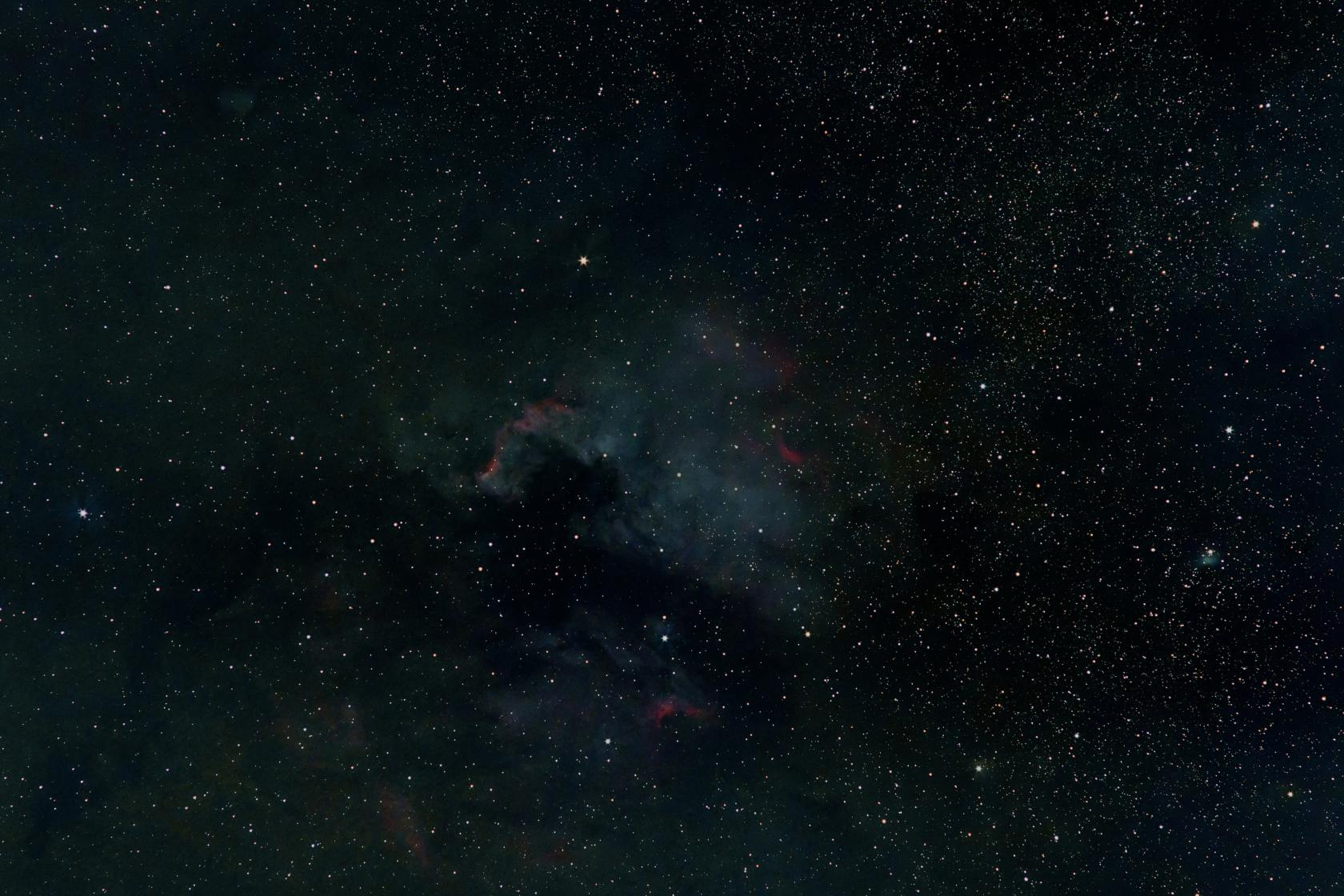
My first photo of the North America Nebula (reprocessed) - Full resolution picture available on Telescopius
Details:
- Date: 16/Aug/2025
- Exposures: 50x1min Lights
- ISO: 3200
- Guiding: Yes
Equipment:
- Camera: Canon 6D
- Lens: Pentax Lens 200 mm Super Takumar 200mm
- Mount: Unknown EQ2 (Modified with OpenAstroMount)
Pelican Nebula / IC 5070
IC 5070
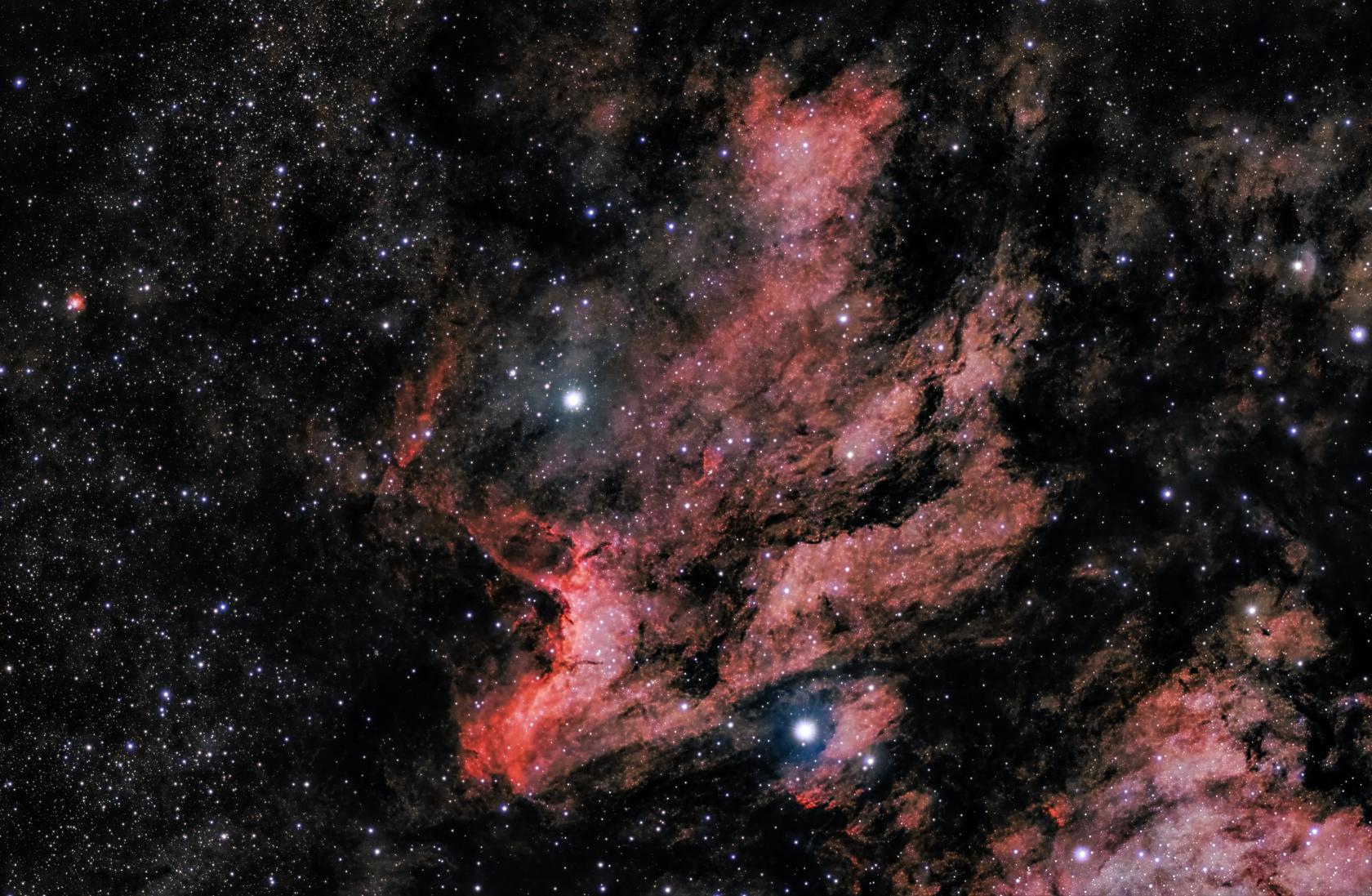
My best photo of the Pelican Nebula - Full resolution picture available on Telescopius
Details:
- Date: 19/Jun/2026
- Exposures: 21x4min Lights, 5x4min Darks, 10x3s Flats, 10x3s Dark Flats
- Gain: 126
- Sensor Temperature: 5ºC
- Guiding: Yes
Equipment:
- Camera: ZWO ASI294MC Pro
- Telescope: Svbony Apochromatic 80/448 mm SV503 80ED Doublet (0.8x reducer/flattener)
- Mount: EQ5 modified with Onstep
Description
The Pelican Nebula (also known as IC 5070) is an H II region associated with the North America Nebula in the constellation of Cygnus. The gaseous contortions of this emission nebula bear a resemblance to a pelican, giving rise to its name. The Pelican Nebula is located nearby first magnitude star Deneb, and is divided from its more prominent neighbour, the North America Nebula, by a foreground molecular cloud filled with dark dust. Both are part of the larger H II region of Westerhout 80.
Find more information about the Pelican Nebula on Wikipedia
Personal Stats
First observation
📆 | 19/06/2026 |
📍 | Santa Cruz, Portugal |
Imaging sessions
Date | Bortle Class | Total Exposure Time |
19/6/2026 | Class 3 | 84min (21x4min) |
Captured media
Photographs
My best photo of the Pelican Nebula - Full resolution picture available on Telescopius
Details:
- Date: 19/Jun/2026
- Exposures: 21x4min Lights, 5x4min Darks, 10x3s Flats, 10x3s Dark Flats
- Gain: 126
- Sensor Temperature: 5ºC
- Guiding: Yes
Equipment:
- Camera: ZWO ASI294MC Pro
- Telescope: Svbony Apochromatic 80/448 mm SV503 80ED Doublet (0.8x reducer/flattener)
- Mount: EQ5 modified with Onstep
Galaxies
Andromeda Galaxy / M31
Messier 31
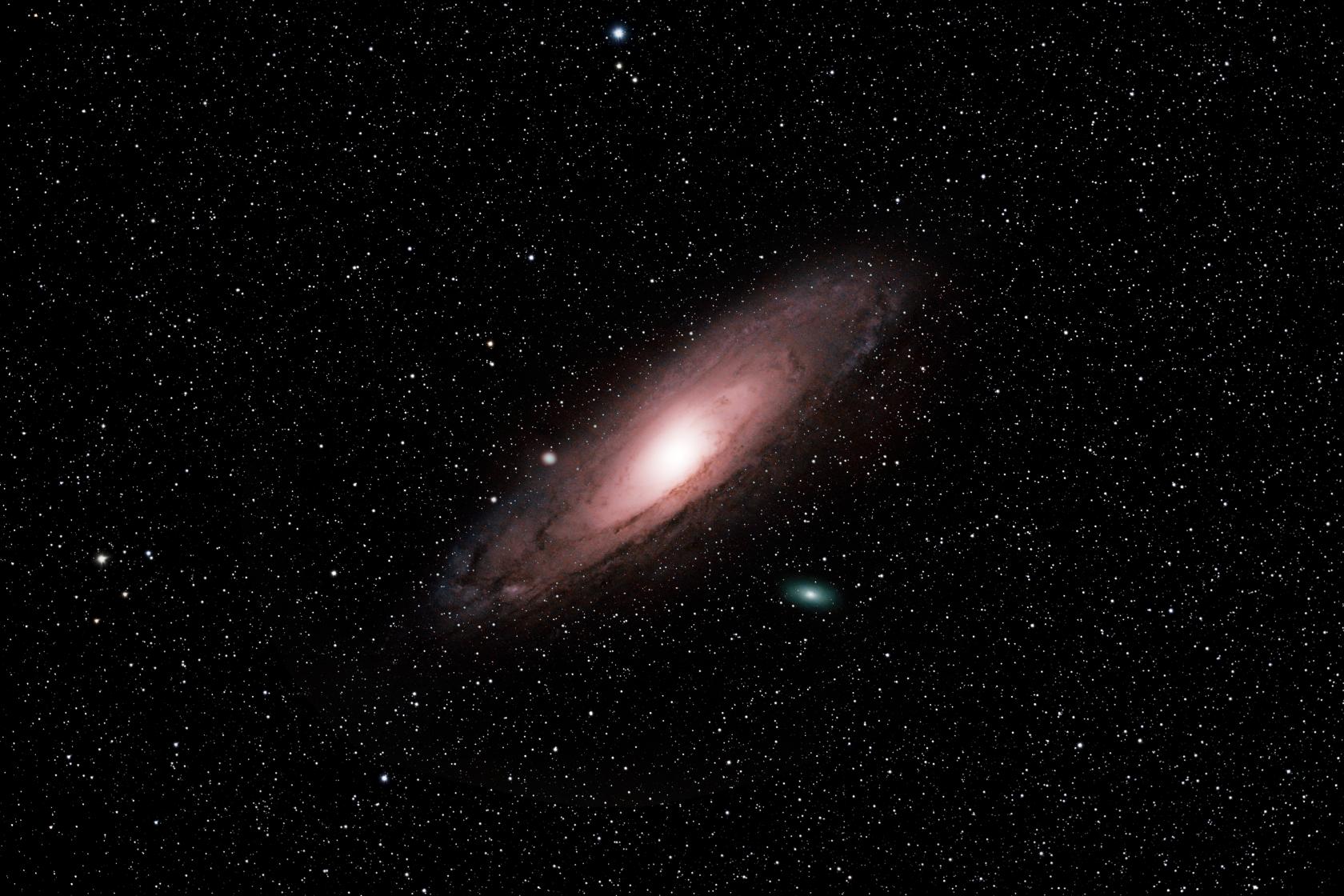
My best photo of the Andromeda galaxy - Full resolution picture available on Telescopius
Details:
- Date: 22/Aug/2022
- Exposures: 80x1min Lights, 10x1min Darks
- ISO: 1600
Equipment:
- Camera: Canon 6D
- Telescope: Svbony Apochromatic 80/448 mm SV503 80ED Doublet (0.8x reducer/flattener)
- Mount: EQ5 modified with Onstep
Description
The Andromeda Galaxy is a barred spiral galaxy and is the nearest major galaxy to the Milky Way. It was originally named the Andromeda Nebula and is cataloged as Messier 31, M31, and NGC 224. Andromeda has a D25 isophotal diameter of about 46.56 kiloparsecs (152,000 light-years) and is approximately 765 kpc (2.5 million light-years) from Earth. The galaxy's name stems from the area of Earth's sky in which it appears, the constellation of Andromeda, which itself is named after the princess who was the wife of Perseus in Greek mythology.
Find more information about the Andromeda Galaxy on Wikipedia
Personal Stats
First observation
📆 | 19/08/2022 |
📍 | Santa Cruz, Portugal |
Imaging sessions
Date | Bortle Class | Total Exposure Time |
22/8/2022 | Class 5 | 2h (60x2min) |
22/8/2023 | Class 5 | 1h20min (180x1min) |
Captured media
Photographs
My best photo of the Andromeda galaxy - Full resolution picture available on Telescopius
Details:
- Date: 22/Aug/2022
- Exposures: 80x1min Lights, 10x1min Darks
- ISO: 1600
Equipment:
- Camera: Canon 6D
- Telescope: Svbony Apochromatic 80/448 mm SV503 80ED Doublet (0.8x reducer/flattener)
- Mount: EQ5 modified with Onstep
Triangulum Galaxy / M33
Messier 33
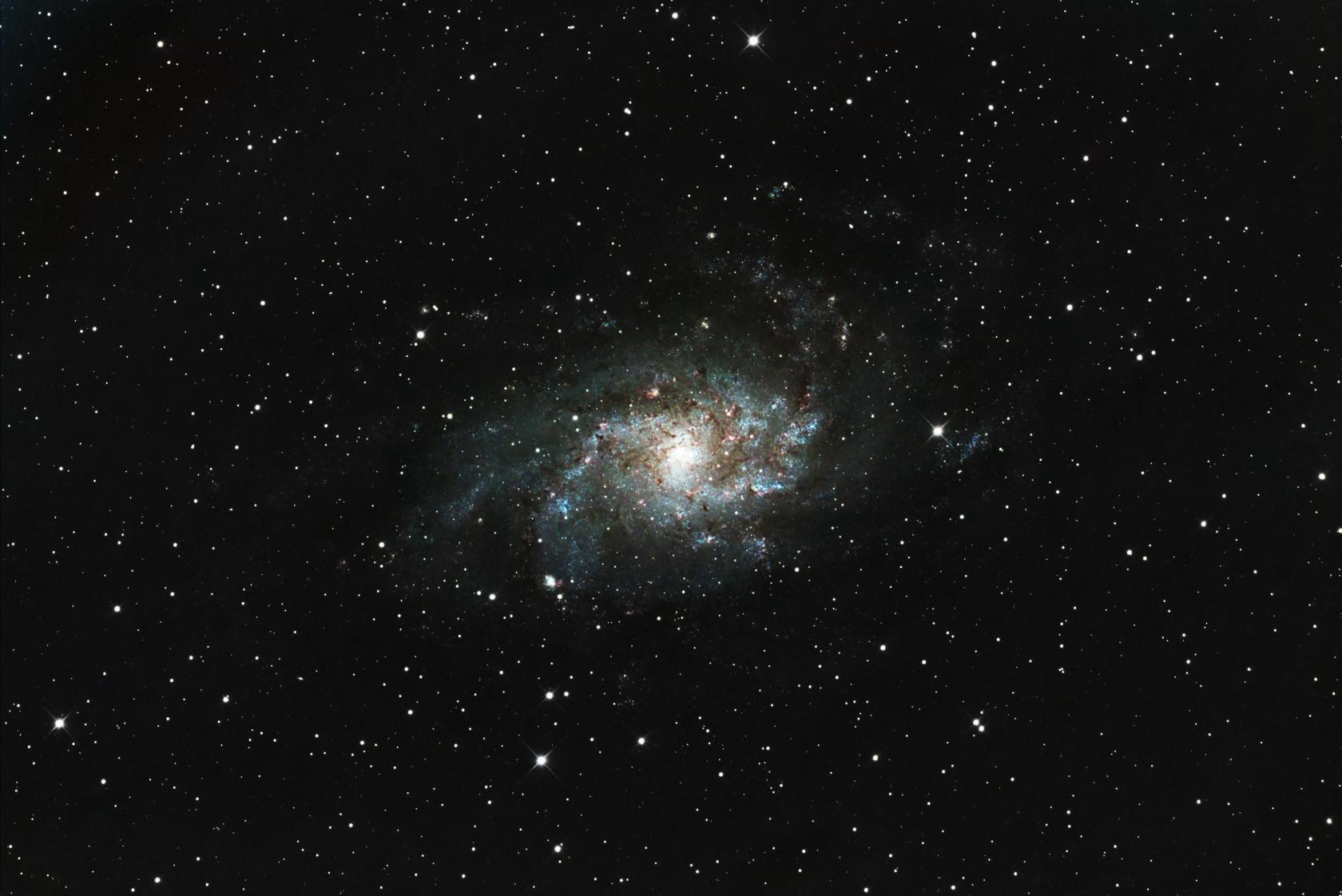
My best photo of the Triangulum galaxy - Full resolution picture available on Telescopius
Details:
- Date: 19/Aug/2026
- Exposures: 31x180s Lights, 5x180s Darks, 10x5s Flats, 10x5s Darkflats
- Gain: 126
- Sensor Temperature: 5ºC
- Guiding: Yes
Equipment:
- Camera: ZWO ASI294MC Pro
- Filters: SVBONY SV260 Light pollution filter
- Telescope: Orion Newtonian 8"/790 mm N 203/790 (0.95x reducer/flattener)
- Mount: EQ6 modified with Onstep
Description
The Triangulum Galaxy is a spiral galaxy 2.73 million light-years (ly) from Earth in the constellation Triangulum. It is catalogued as Messier 33 or NGC 598. With the D25 isophotal diameter of 18.74 kiloparsecs (61,100 light-years), the Triangulum Galaxy is the third-largest member of the Local Group of galaxies, behind the Andromeda Galaxy and the Milky Way.
Find more information about the Triangulum Galaxy on Wikipedia
Personal Stats
First observation
📆 | 31/8/2024 |
📍 | Canadelo, Portugal |
Imaging sessions
Date | Bortle Class | Total Exposure Time |
31/8/2024 | Class 3 | 1h03min (63x1min) |
19/6/2026 | Class 5 | 1h55min (31x180s) |
Captured media
Photographs
My best photo of the Triangulum galaxy - Full resolution picture available on Telescopius
Details:
- Date: 19/Aug/2026
- Exposures: 31x180s Lights, 5x180s Darks, 10x5s Flats, 10x5s Darkflats
- Gain: 126
- Sensor Temperature: 5ºC
- Guiding: Yes
Equipment:
- Camera: ZWO ASI294MC Pro
- Filters: SVBONY SV260 Light pollution filter
- Telescope: Orion Newtonian 8"/790 mm N 203/790 (0.95x reducer/flattener)
- Mount: EQ6 modified with Onstep
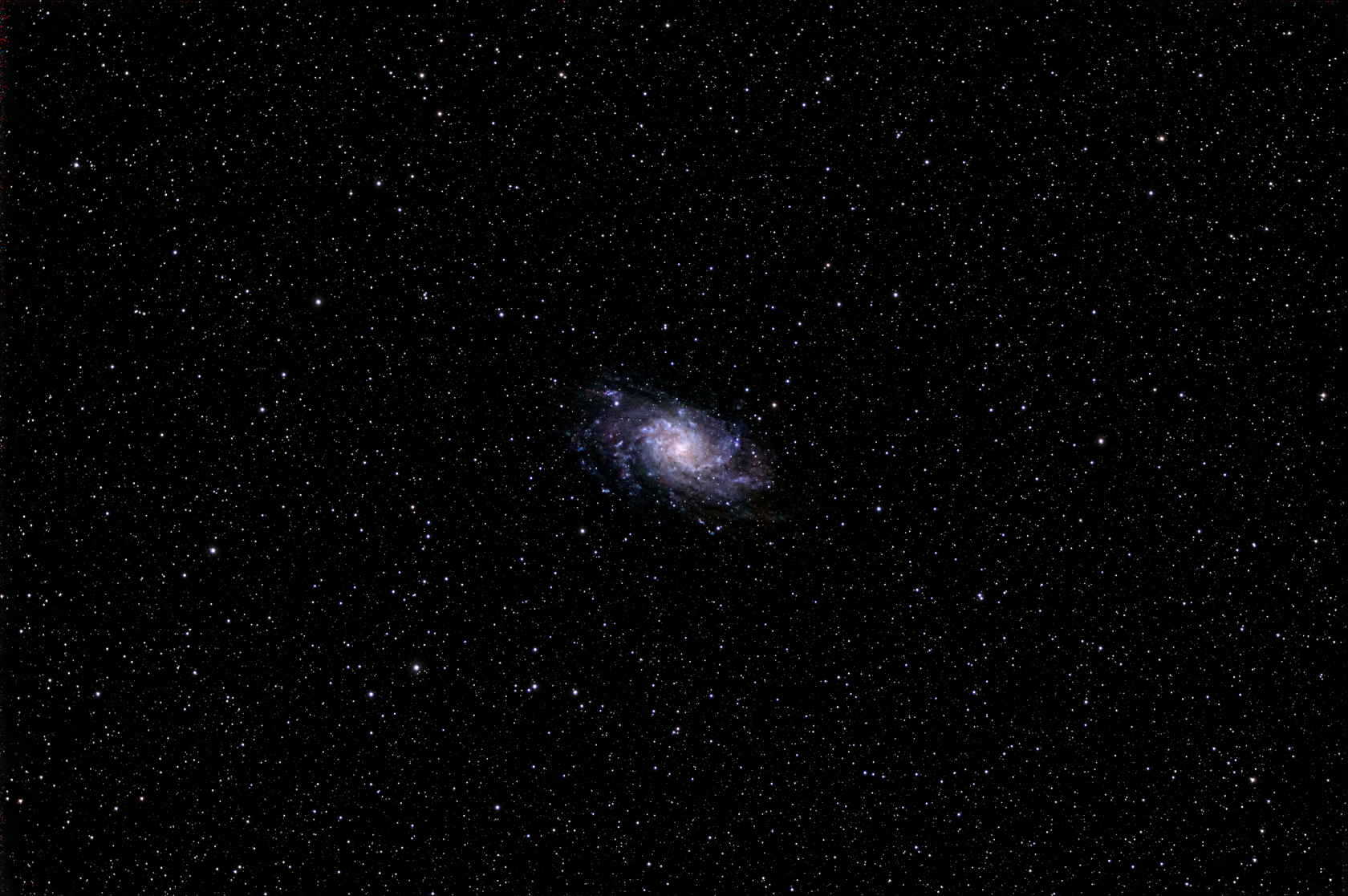
My best photo of the Triangulum galaxy - Full resolution picture available on Telescopius
Details:
- Date: 31/Aug/2024
- Exposures: 63x1min Lights, 10x60min Darks
- ISO: 800
Equipment:
- Camera: Canon 6D
- Telescope: Svbony Apochromatic 80/448 mm SV503 80ED Doublet (0.8x reducer/flattener)
- Mount: EQ5 modified with Onstep
Star Clusters
Pleiades / M45
Messier 45 (and NGC1432 / NGC1435)
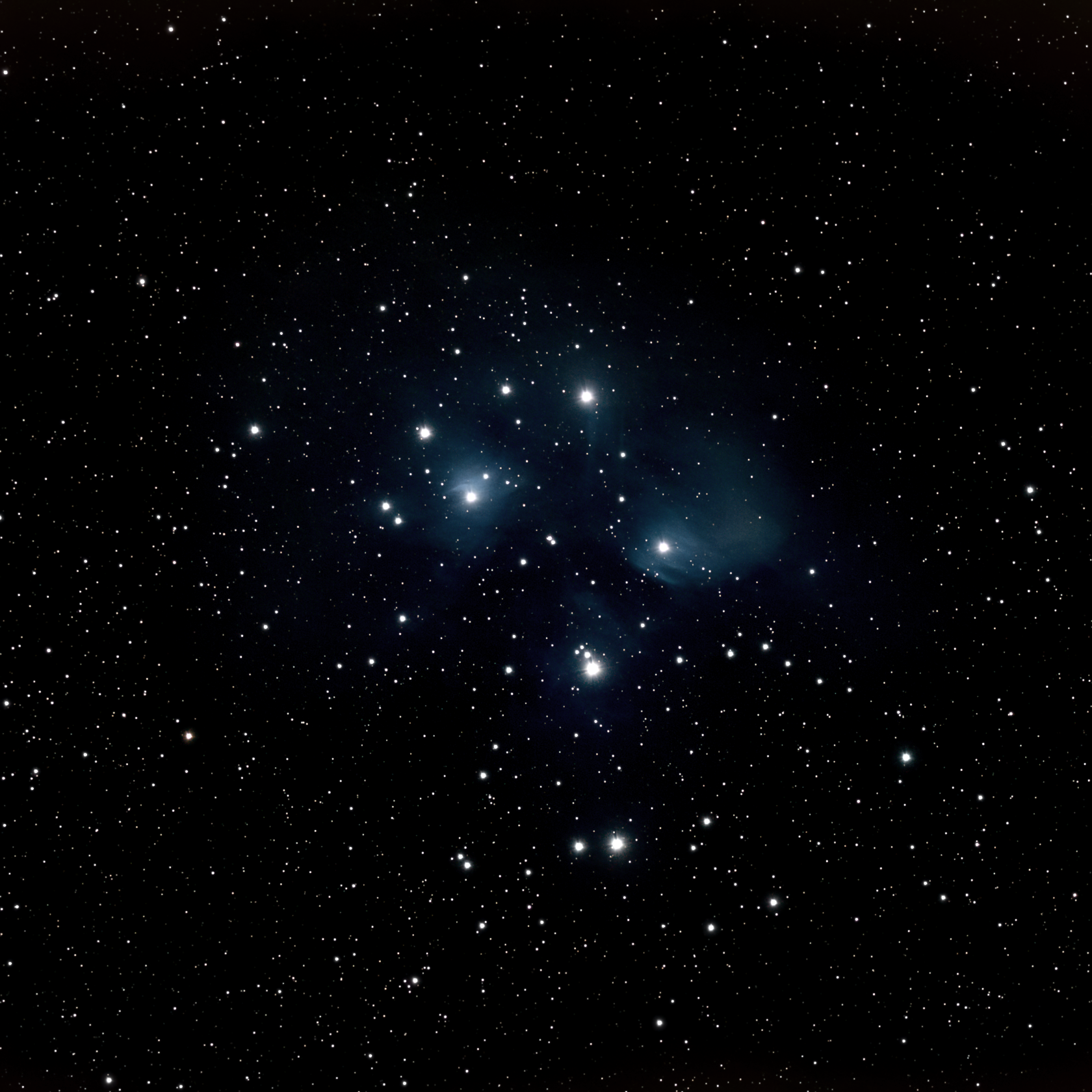
My best photo of the Pleiades - Full resolution picture available on Telescopius
Details:
- Date: 22/Aug/2023
- Exposures: 45x1min Lights, 10x1min Darks
- ISO: 1600
Equipment:
- Camera: Canon 6D
- Telescope: Svbony Apochromatic 80/448 mm SV503 80ED Doublet (0.8x reducer/flattener)
- Mount: EQ5 modified with Onstep
Description
The Pleiades also known as Seven Sisters and Messier 45 (M45), is an asterism of an open star cluster containing young B-type stars in the northwest of the constellation Taurus. At a distance of about 444 light-years, it is among the nearest star clusters to Earth and the nearest Messier object to Earth, being the most obvious star cluster to the naked eye in the night sky. It contains the reflection nebulae NGC 1432, an HII region, and NGC 1435, known as the Merope Nebula. Around 2330 BC the Pleiades marked the vernal point. Due to the brightness of its stars, the Pleiades is viewable from most areas on Earth, even in locations with significant light pollution.
Find more information about the Pleiades on Wikipedia
Personal Stats
First observation
📆 | 22/08/2023 |
📍 | Santa Cruz, Portugal |
Imaging sessions
Date | Bortle Class | Total Exposure Time |
22/8/2023 | Class 4 | 45min (45x1min) |
Captured media
Photographs
My best photo of the Pleiades - Full resolution picture available on Telescopius
Details:
- Date: 22/Aug/2023
- Exposures: 45x1min Lights, 10x1min Darks
- ISO: 1600
Equipment:
- Camera: Canon 6D
- Telescope: Svbony Apochromatic 80/448 mm SV503 80ED Doublet (0.8x reducer/flattener)
- Mount: EQ5 modified with Onstep
Comets
Tsuchinshan–ATLAS / C/2023 A3
Tsuchinshan–ATLAS
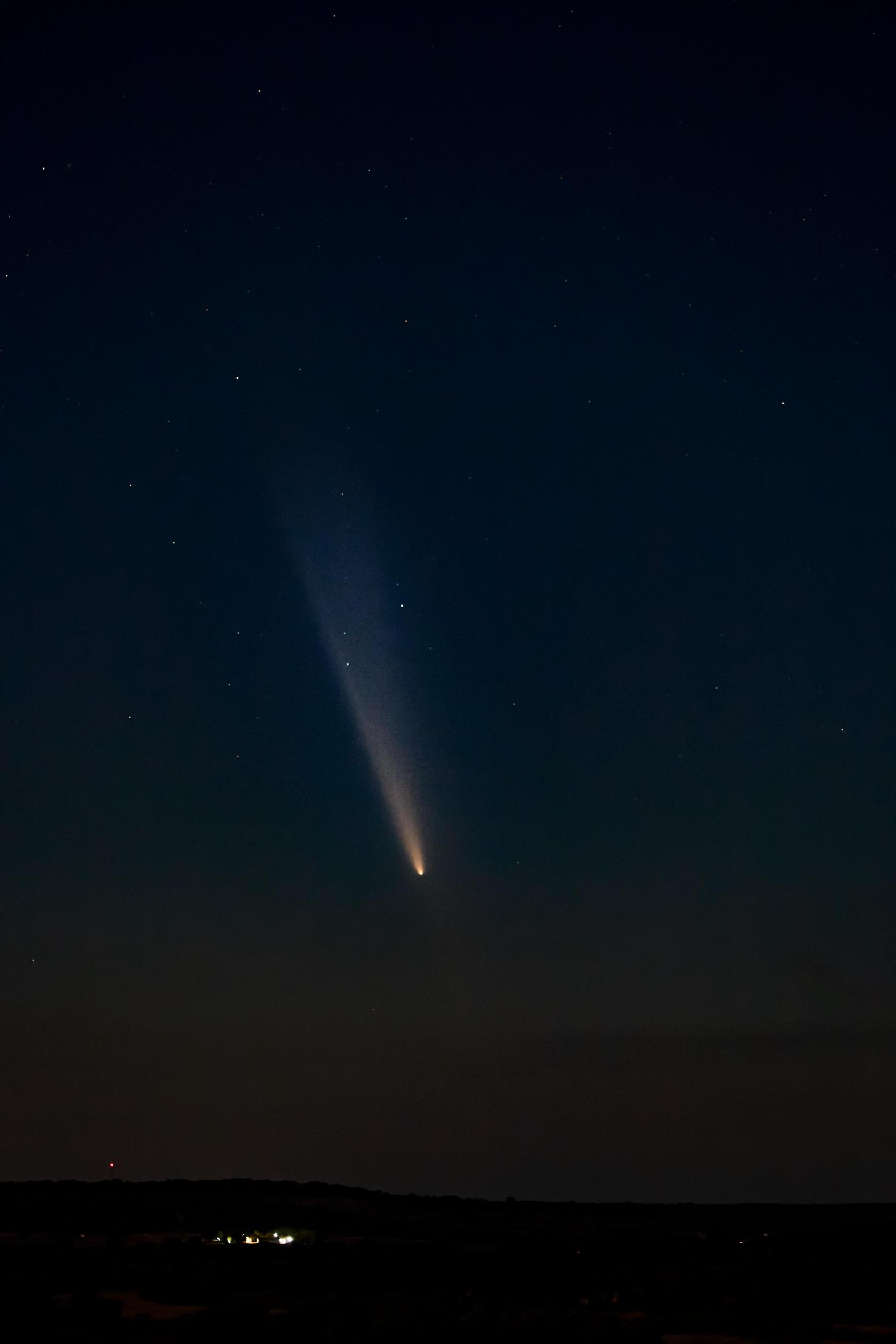
My only photo of the C/2023 A3 comet - Full resolution picture available on Telescopius
Details:
- Date: 13/Oct/2023
- Exposures: 1x2.5s exposure
- ISO: 1600
Equipment:
- Camera: Canon 6D
- Lens: Tamron 100-400mm f/4.5-6.3 Di VC USD
- Mount: Photography Tripod
Description
Comet Tsuchinshan–ATLAS, also known as the Great Comet of 2024 and formally designated as C/2023 A3, is a comet from the Oort cloud discovered by the Purple Mountain Observatory in China on 9 January 2023 and independently found by ATLAS South Africa on 22 February 2023. The comet passed perihelion at a distance of 0.39 AU (58 million km; 36 million mi) on 27 September 2024, when it became visible to the naked eye.[7] Tsuchinshan–ATLAS peaked its brightest magnitude on 9 October, shortly after passing the Sun, with a magnitude of −4.9 per reported observations at the Comet Observation Database (COBS).[7]
Find more information about the Comet Tsuchinshan–ATLAS on Wikipedia
Personal Stats
First observation
📆 | 13/08/2023 |
📍 | Torrão, Portugal |
Imaging sessions
Date | Bortle Class | Total Exposure Time |
13/8/2023 | Class 3 | 2.5s |
Captured media
Photographs
My only photo of the C/2023 A3 comet - Full resolution picture available on Telescopius
Details:
- Date: 13/Oct/2023
- Exposures: 1x2.5s exposure
- ISO: 1600
Equipment:
- Camera: Canon 6D
- Lens: Tamron 100-400mm f/4.5-6.3 Di VC USD
- Mount: Photography Tripod
Eclipses
Total Solar Eclipse 12/06/26 - Léon, Spain (travel blog)
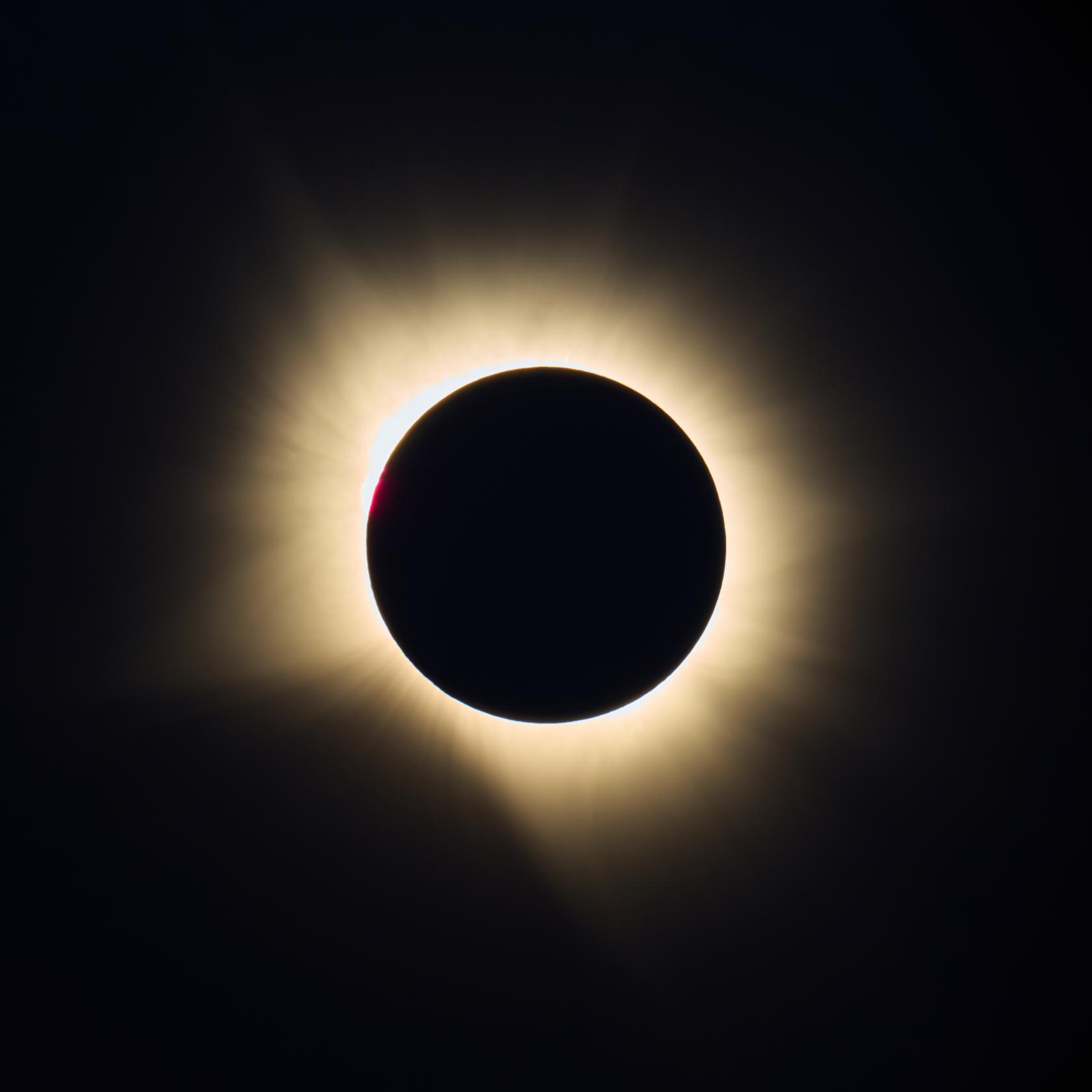
Final pictures at the end of the post!
Chasing the Total Solar Eclipse in Spain
This year I traveled to Spain to see the total solar eclipse, and it turned out to be quite the adventure. Full of unexpected surprises, near-misses, and, in the end, a healthy dose of luck.
Planning and the First Setback
I used this website to figure out which locations were statistically less likely to be clouded over on eclipse day, and settled on somewhere around León. I booked an Airbnb and thought that part of the trip was sorted.
Then came the first unlucky break: a few months before the eclipse, my Airbnb host messaged to say my reservation was cancelled because the house had been sold. I scrambled to find somewhere else, but as expected, almost everything nearby was already booked. Eventually I found a place at the San Isidro ski resort, pricier than I'd hoped, but I didn't have much choice.
Scouting and Gear Prep
About a month before the eclipse, I started scouting good vantage points near San Isidro. I found a promising spot at high elevation and was happy with it, then turned my attention to testing my equipment.
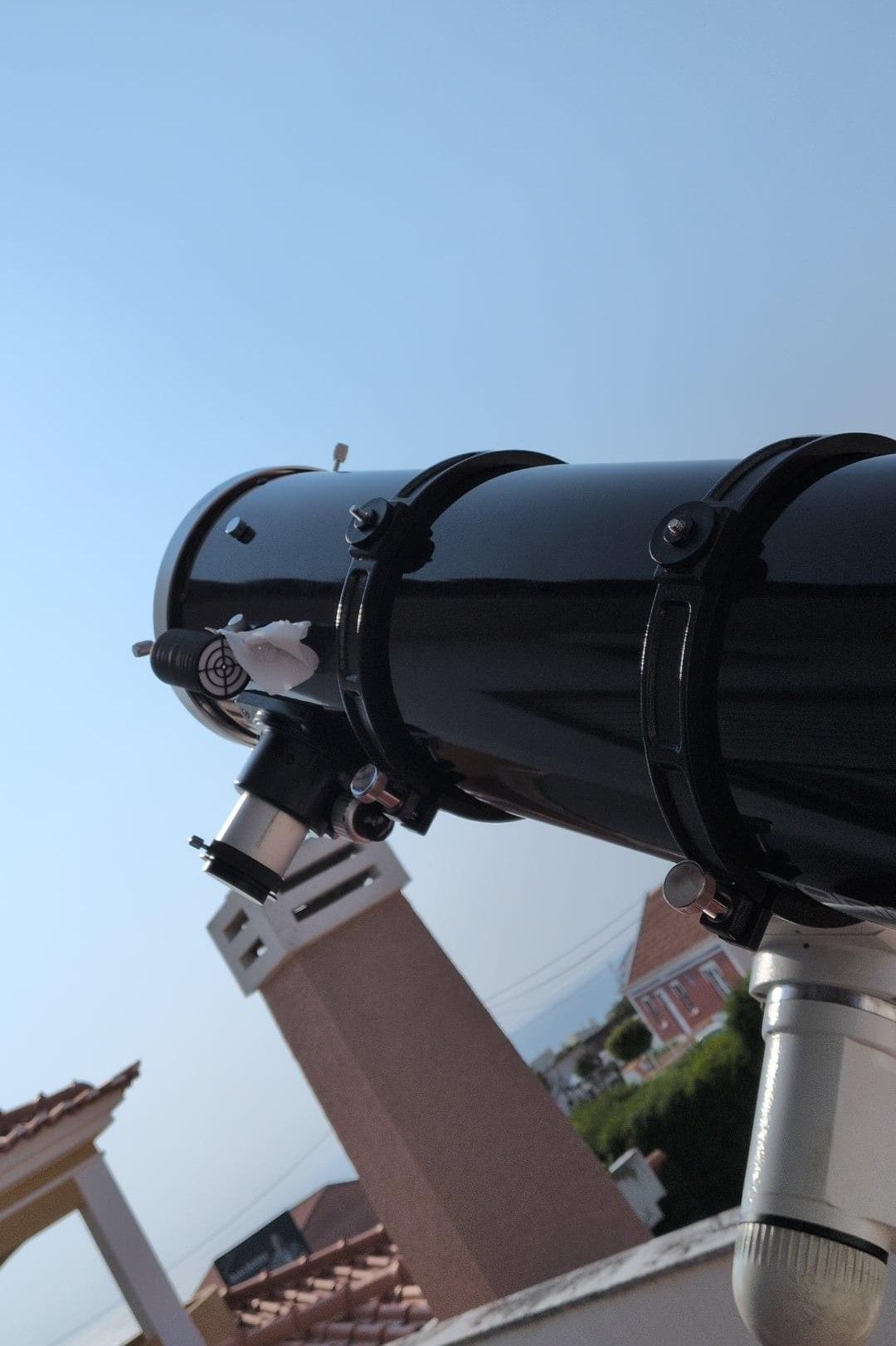
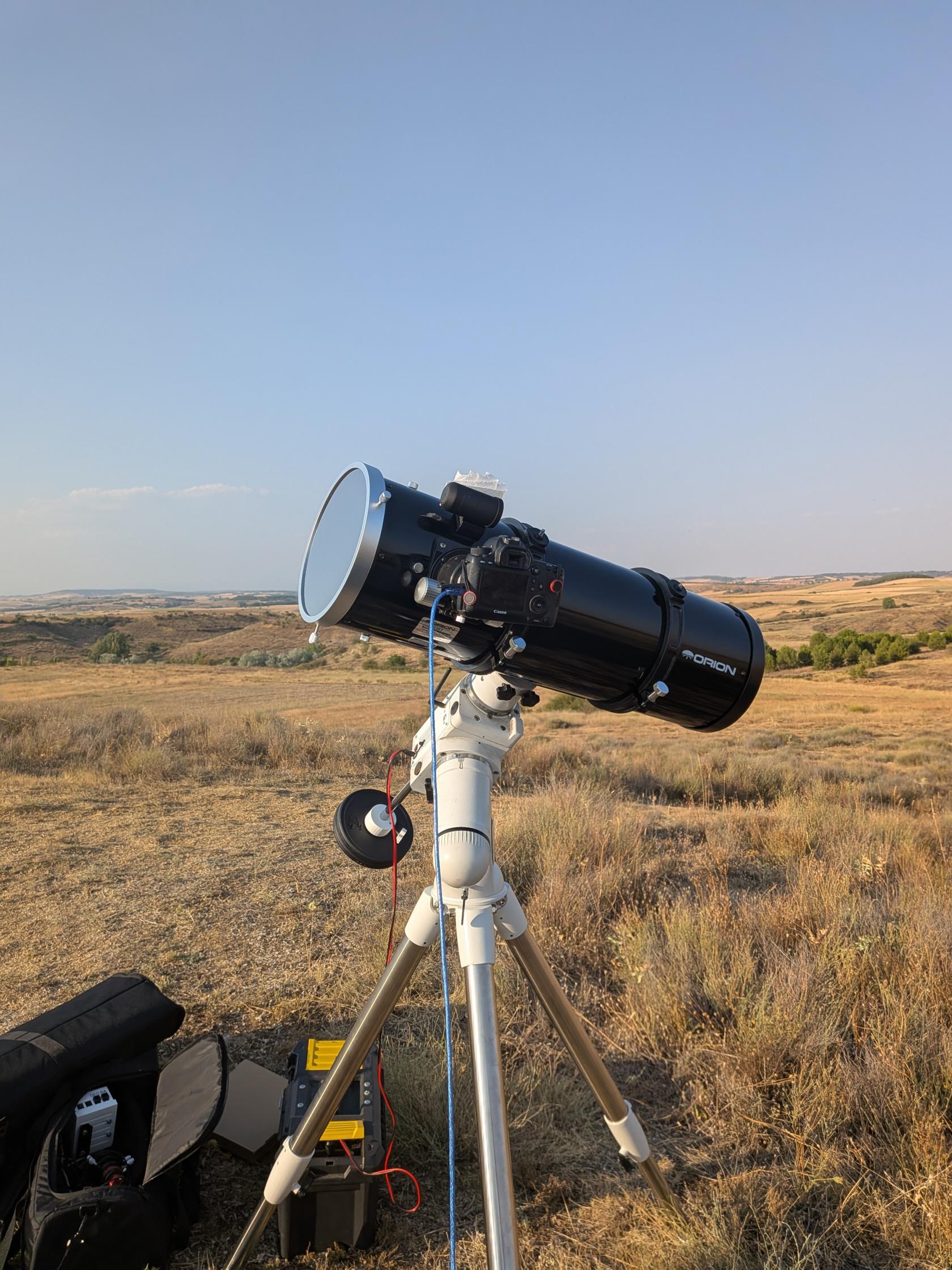
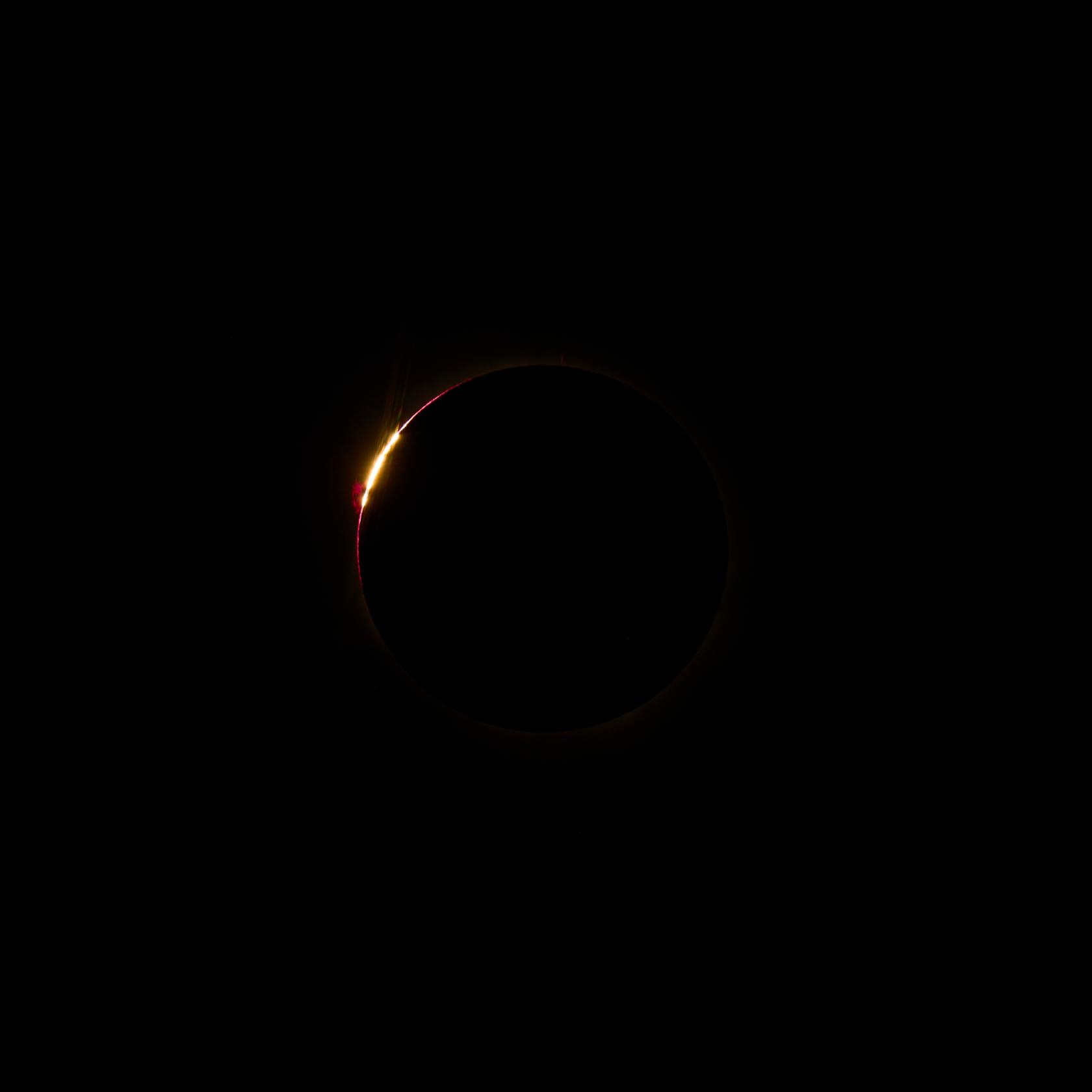
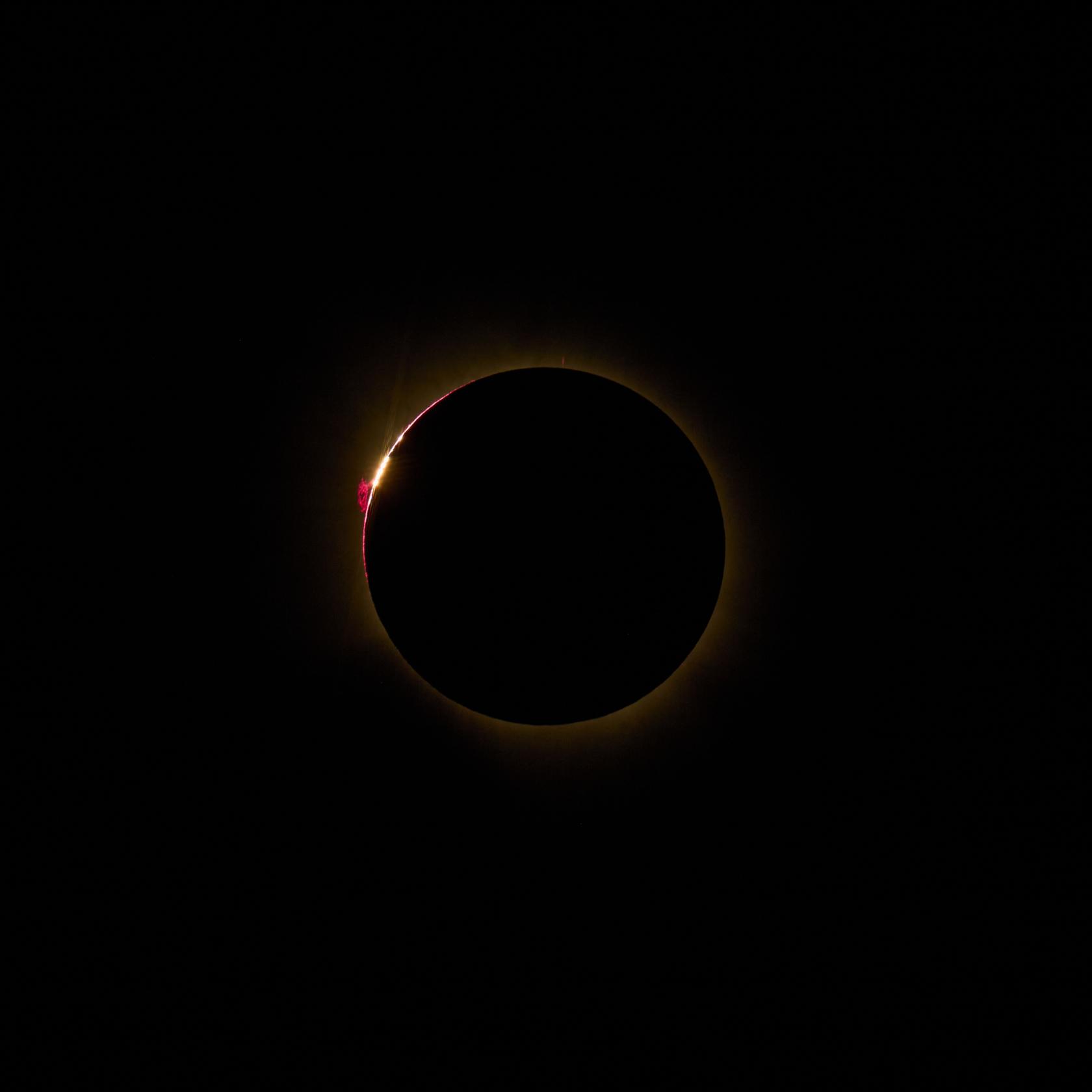
I really wanted a close-up shot of the sun to capture detail in the prominences and Baily's beads. My only option for that kind of reach was my 8-inch f/3.9 Newtonian. Normally my deep-sky scope, and total overkill for this, but it was what I had. Since the scope was too heavy for my lighter EQ5 mount, I had to bring the EQ6 instead, which meant a lot more baggage to haul along.
For the camera, I went with my Canon 6D rather than my ZWO ASI294MC Pro, since most eclipse-photography software seemed to only support DSLRs. I used an online exposure calculator to work out settings for the different phases of the eclipse. That worked fine for the partial phase, but the telescope's large aperture became a problem near totality and during totality itself since the required exposure times were faster than my camera could manage.
The fix was to stop the telescope down. By using the cap with its small removable cover open, I reduced the effective aperture to 750.5mm ÷ 55mm ≈ f/13.6, which brought the exposure times back into a workable range.
For automating the shots, I chose Solar Eclipse Timer 'n Capture (SETnC). It fit my philosophy perfectly: let the telescope handle the technical side automatically so I could actually watch the eclipse with my own eyes. Setup, testing, and use were all straightforward.
In the weeks before the trip, I printed a solar finder, which made rough framing quick and painless. Overall, dialing in the process took only a couple of afternoons. The one real unknown was the exposure timing for totality since there was no good way to test that in advance, so it came down to careful calculation, crossing my fingers, and hoping for the best.
The Road to San Isidro
As the days passed by, I kept anxiously refreshing weather forecasts, watching cloud coverage swing up and down with no clear pattern. It was nerve-wracking, but I stayed cautiously confident.
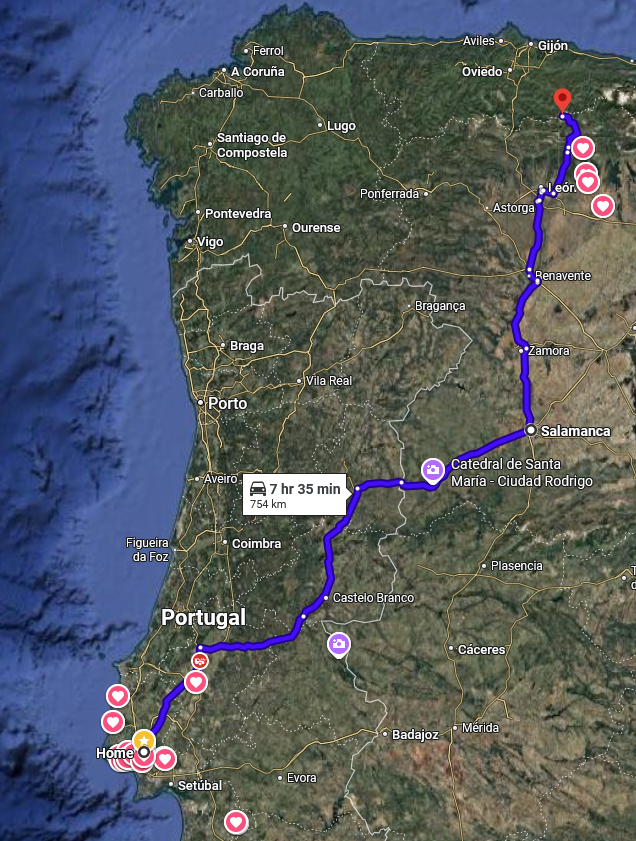
On August 11th, we finally packed the car and set off for San Isidro. We stopped in Salamanca for lunch and some sightseeing along the way. Between the stops and the driving, it ended up being a full day on the road, and we didn't arrive until close to midnight.
Eclipse Day
On the day itself, the forecast for my original chosen spot wasn't looking great. Not terrible, but any clouds at all felt unacceptable given everything I'd put into this. So I kept scanning forecasts and eventually settled on a new location in Cea, which was predicting 0% cloud coverage.
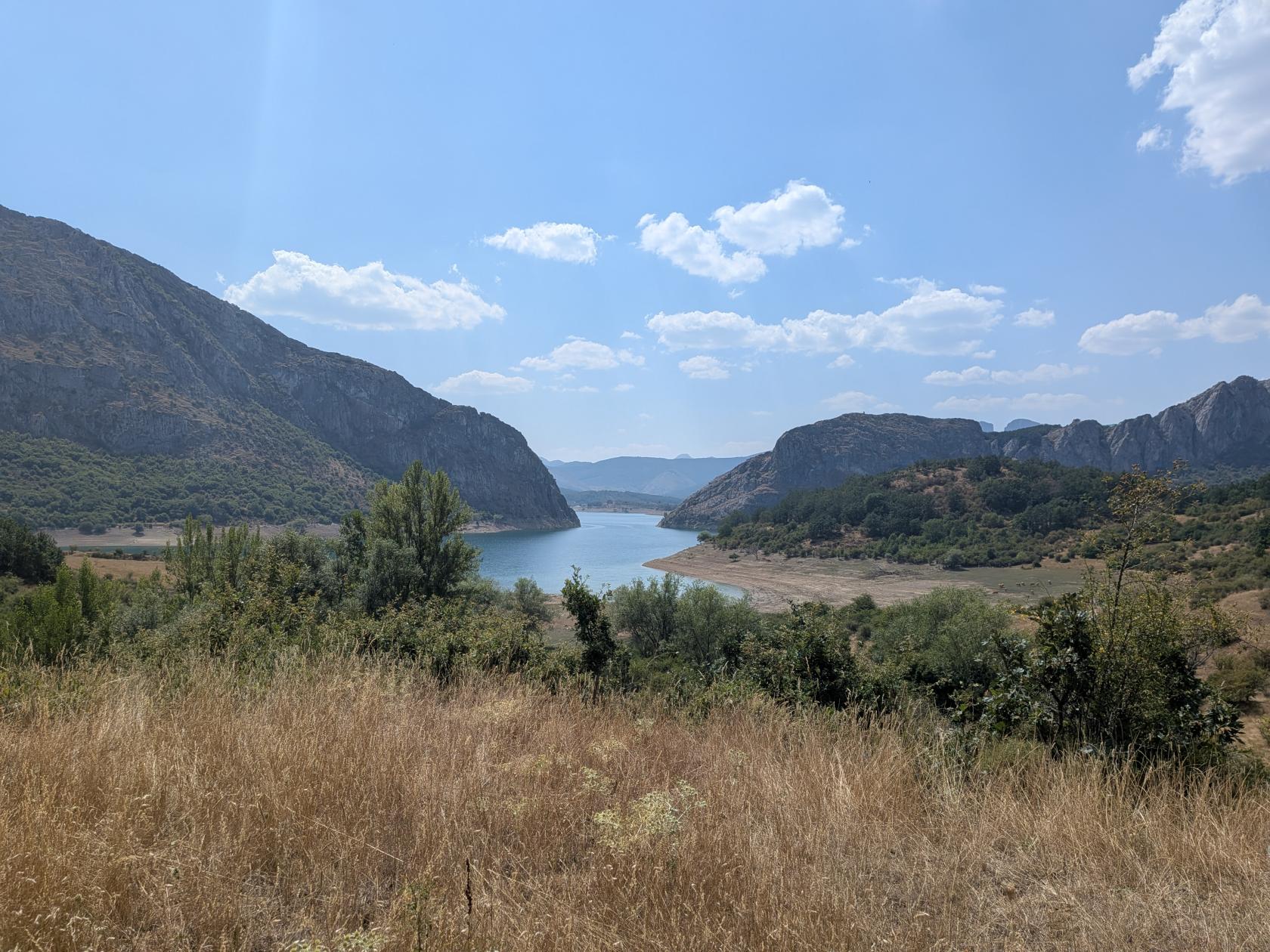
We spent the day exploring around San Isidro, stopping to take in the stunning mountain scenery. As the hours passed, we started noticing other eclipse chasers, people camping out and setting up tripods in anticipation.
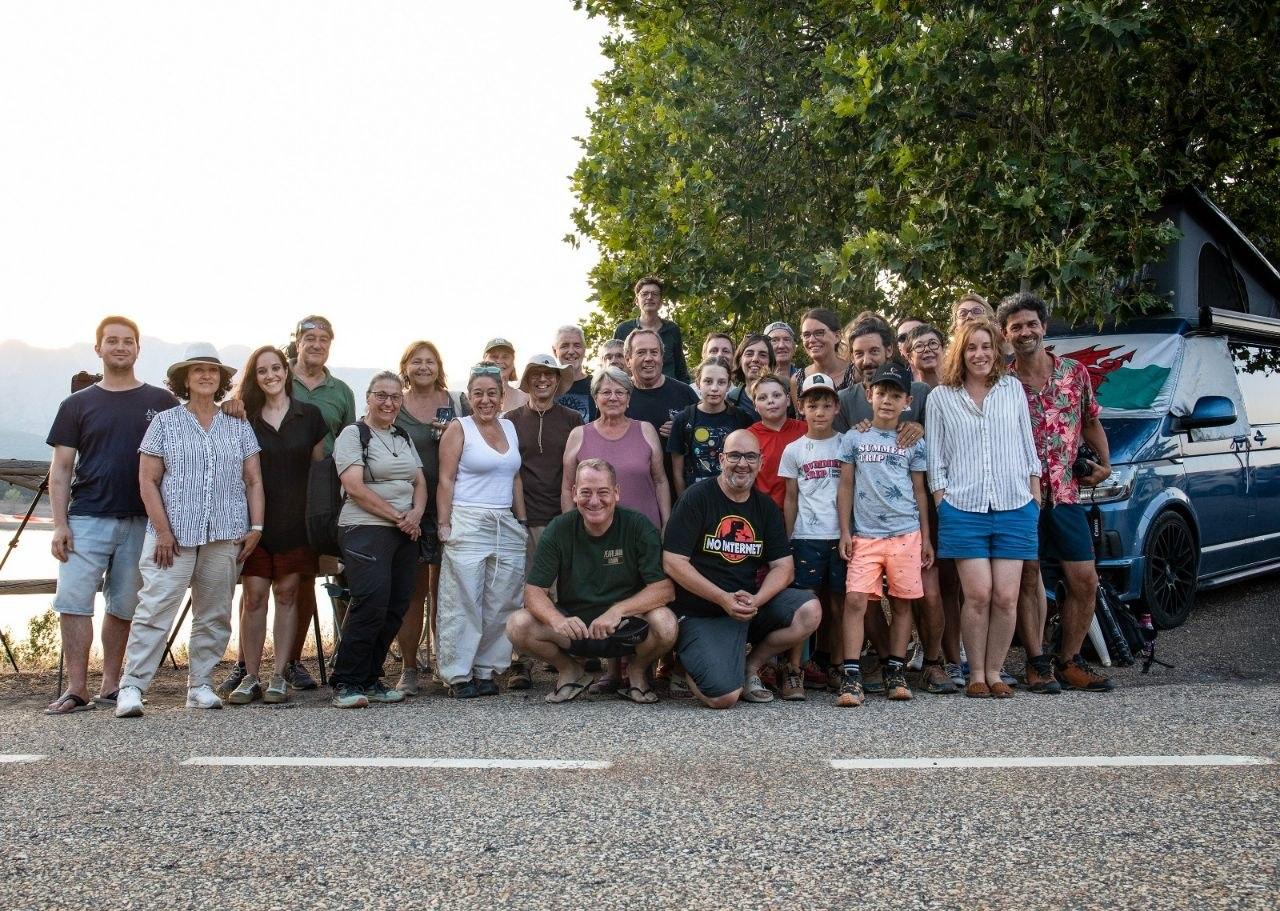
To our delight, we ran into a group of Portuguese tourists who had also made the trip specifically for the eclipse. They were incredibly warm and welcoming, invited us over for coffee, and we spent a good while nerding out together about astronomy and photography.
When we mentioned we'd forgotten our solar glasses, they didn't hesitate, they had a couple of spare pairs and gave them to us on the spot. I can't thank that group enough. They saved our eyes, and honestly, they made the whole experience even better. Maybe we'll meet them again on next year's solar eclipse?
Setting Up at the Spot
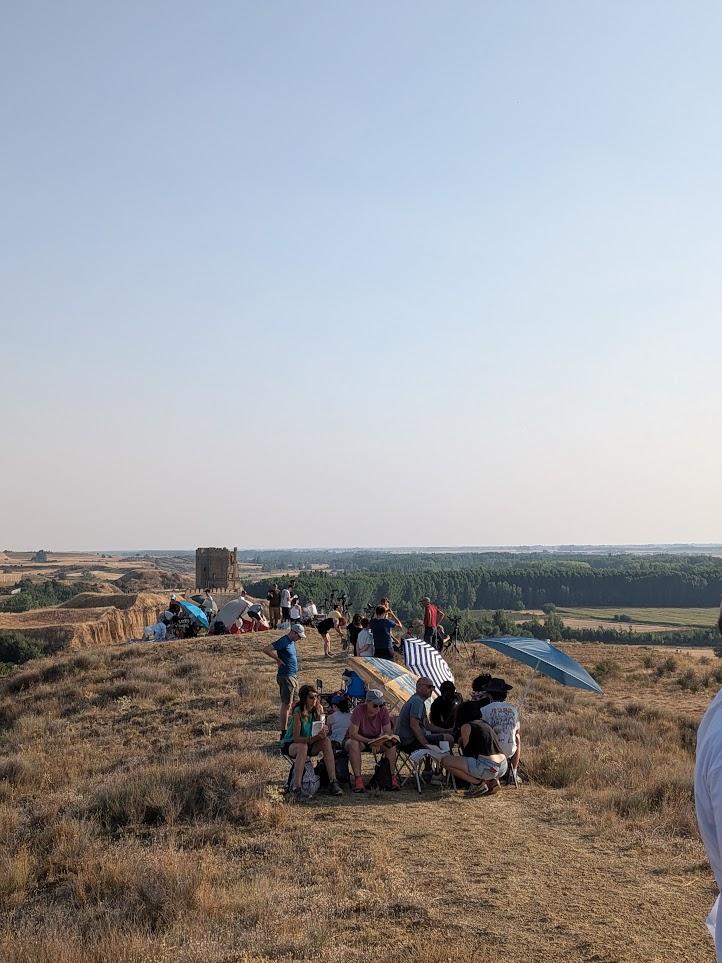
After that, we headed to the spot I'd picked. It was incredibly hot. When we arrived, a couple of people were already there. We carefully drove around bushes and tall grass to reach the highest point, where I could start setting up the gear.
As time went on, more and more people gathered at our spot. We could hear Spanish, Portuguese, English, and French all around us. It was amazing to see so many people, from so many places, brought together by the same eclipse.
Totality
The moment was approaching, and we watched the moon and sun slowly creep together. SETnC started taking pictures on schedule. We all stared up at the sun, glasses on of course, anxiously waiting for totality.
As totality neared, SETnC's sound cue told me to remove the solar filter so it could start capturing the diamond ring and Baily's beads. From that moment on, I completely forgot about the setup.
Seeing totality with the naked eye is something else entirely. It far surpassed my expectations, and I savored every second of it. Hearing the collective gasp and awe ripple through the crowd around us made it even more unforgettable.
Eventually I remembered that I was also taking pictures, so I rushed over to the camera to see the results. I was in awe with the previews!
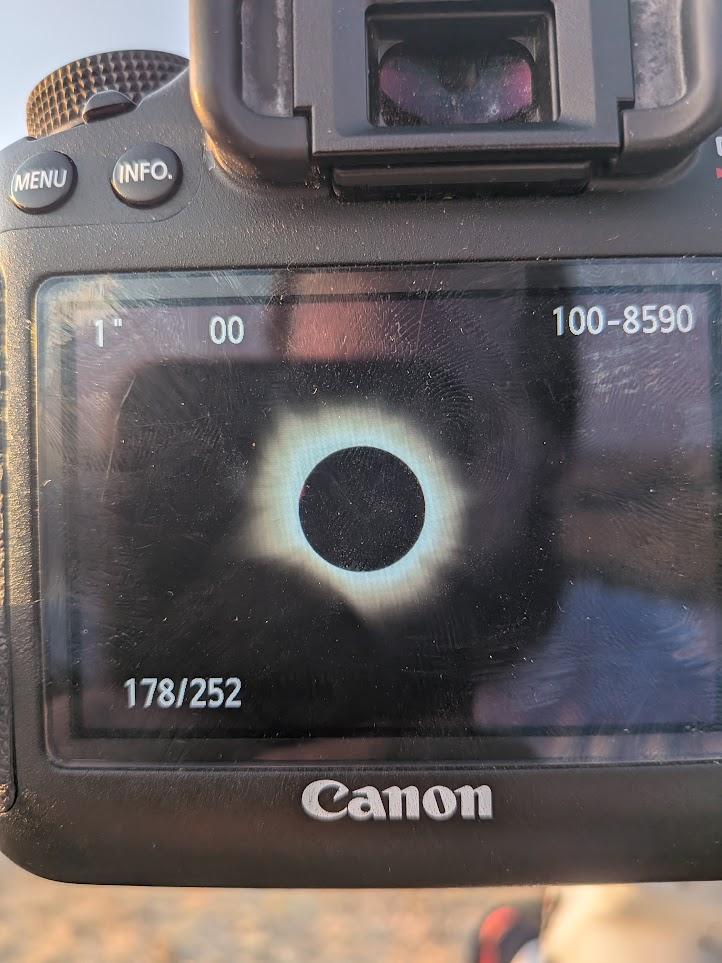
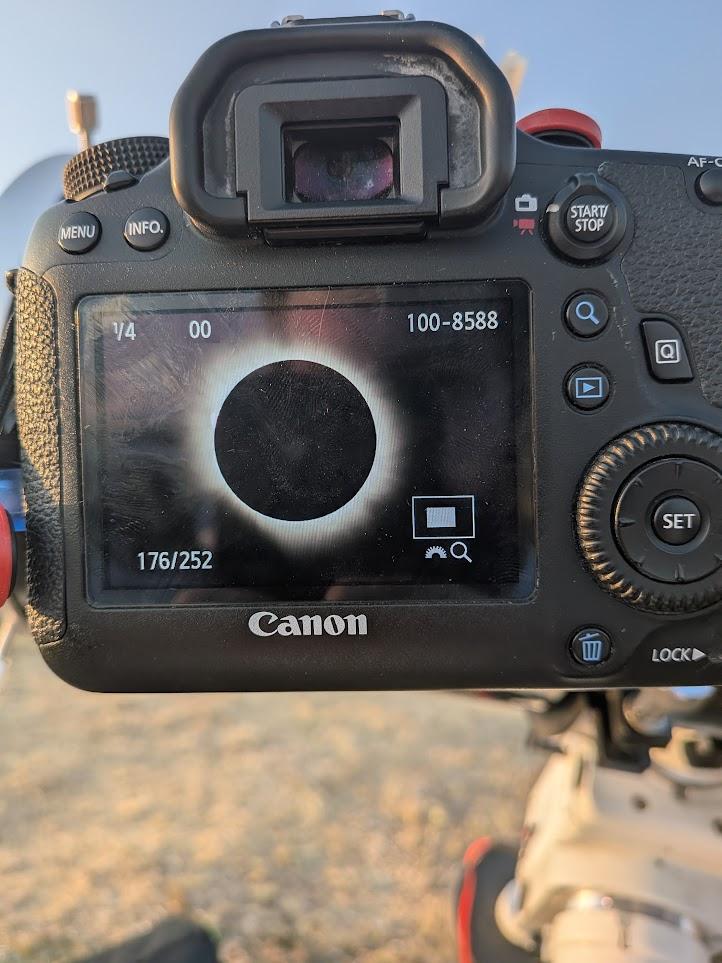
The Pictures
We couldn't stop talking about it the whole way home, still buzzing with excitement. As soon as we got back to the Airbnb, I downloaded the pictures and started going through them.
The partial phase shots were just OK, nothing too exciting. My solar filter didn't resolve much detail on the sun's surface, and the partial phase after totality came out badly underexposed, since it happened close to sunset and I hadn't accounted for that when calculating exposure times.
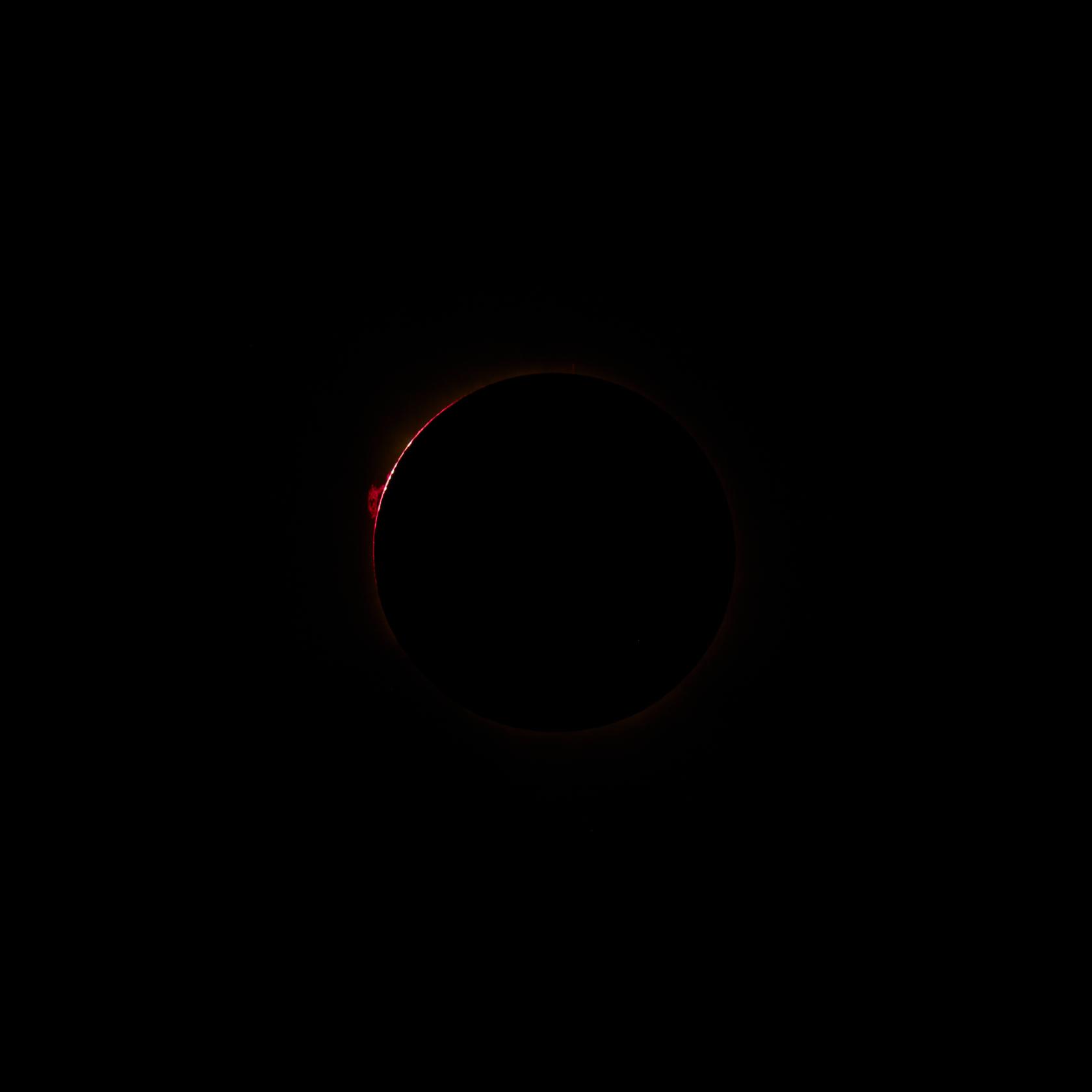
The totality and near-totality shots, though, turned out really well. I'm not sure there's any special processing technique at play. They barely needed editing to look good. Just a bit of a levels adjustment and a small saturation boost, and they were ready.
And now, for the final pictures. Drumroll, please!
Final Thoughts
Between the cancelled Airbnb, the forgotten glasses, the overkill telescope, and the last-minute location swap, nothing about this trip went quite according to plan, and yet it all somehow came together perfectly. The kindness of strangers, a bit of luck with the clouds, and a few clear minutes of totality made every bit of the stress worth it.
I'm already looking forward to the next total solar eclipse in 2027. Here's hoping the planning goes a little more smoothly next time.