Total Solar Eclipse 12/06/26 - Léon, Spain (travel blog)
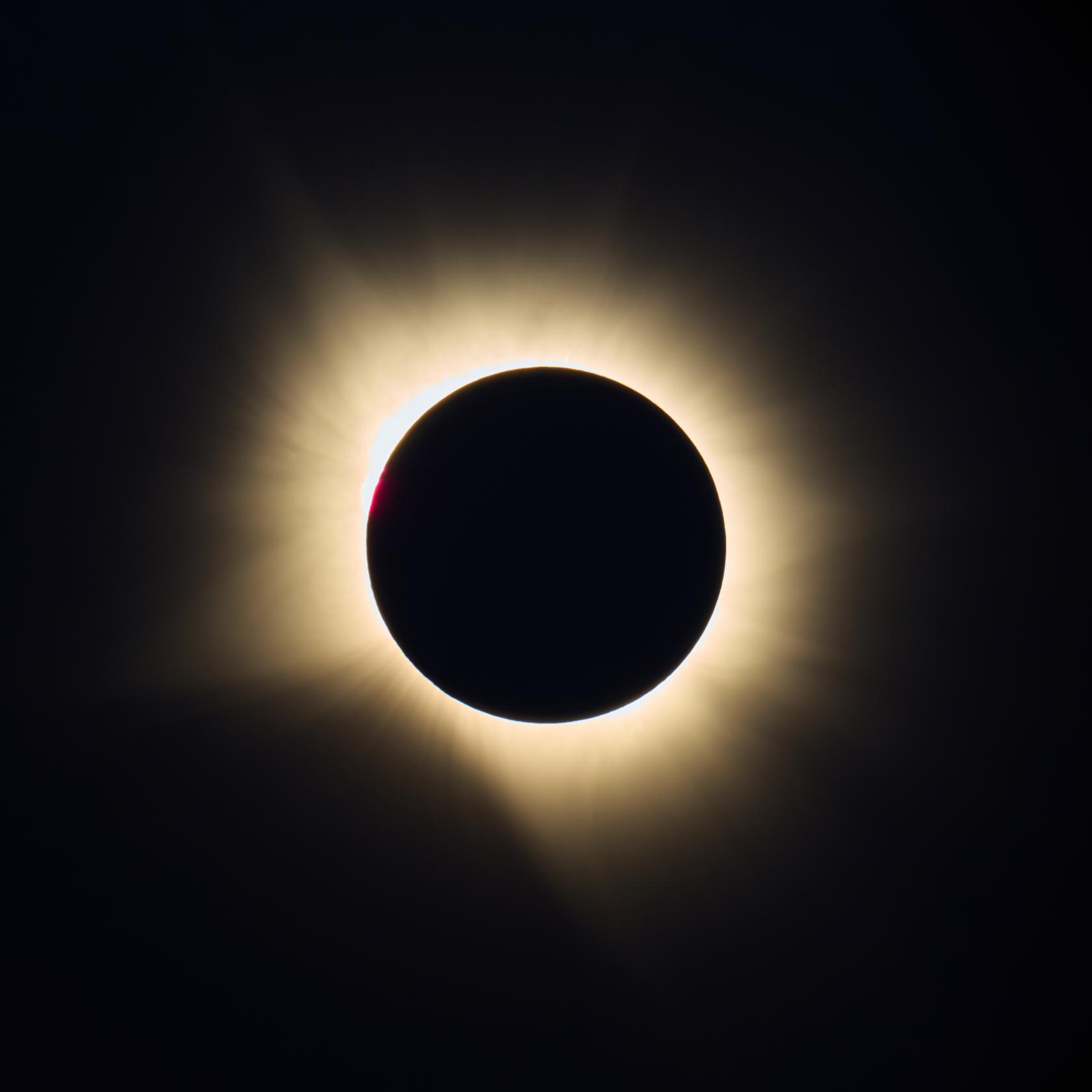
Final pictures at the end of the post!
Chasing the Total Solar Eclipse in Spain
This year I traveled to Spain to see the total solar eclipse, and it turned out to be quite the adventure. Full of unexpected surprises, near-misses, and, in the end, a healthy dose of luck.
Planning and the First Setback
I used this website to figure out which locations were statistically less likely to be clouded over on eclipse day, and settled on somewhere around León. I booked an Airbnb and thought that part of the trip was sorted.
Then came the first unlucky break: a few months before the eclipse, my Airbnb host messaged to say my reservation was cancelled because the house had been sold. I scrambled to find somewhere else, but as expected, almost everything nearby was already booked. Eventually I found a place at the San Isidro ski resort, pricier than I'd hoped, but I didn't have much choice.
Scouting and Gear Prep
About a month before the eclipse, I started scouting good vantage points near San Isidro. I found a promising spot at high elevation and was happy with it, then turned my attention to testing my equipment.
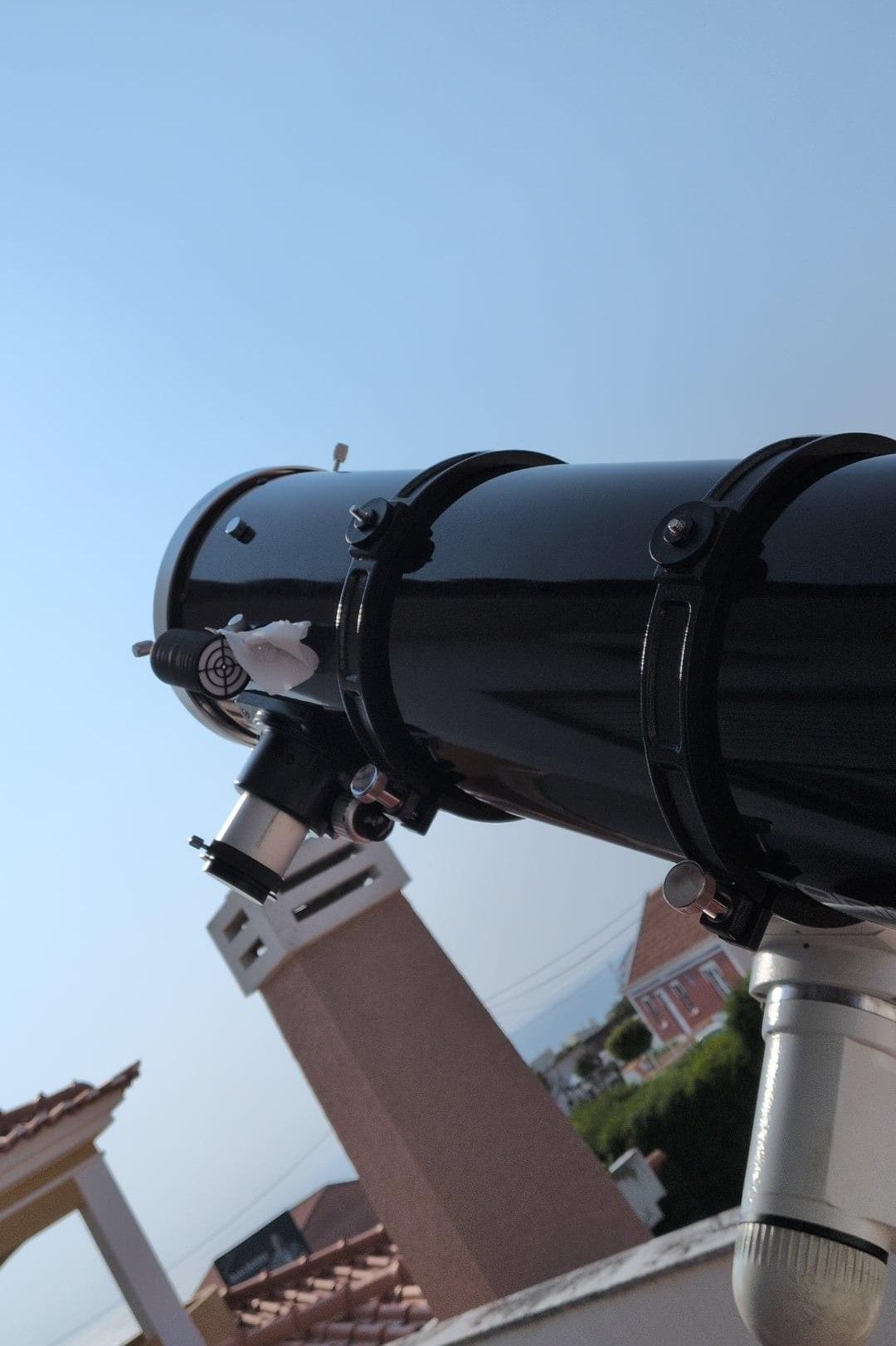
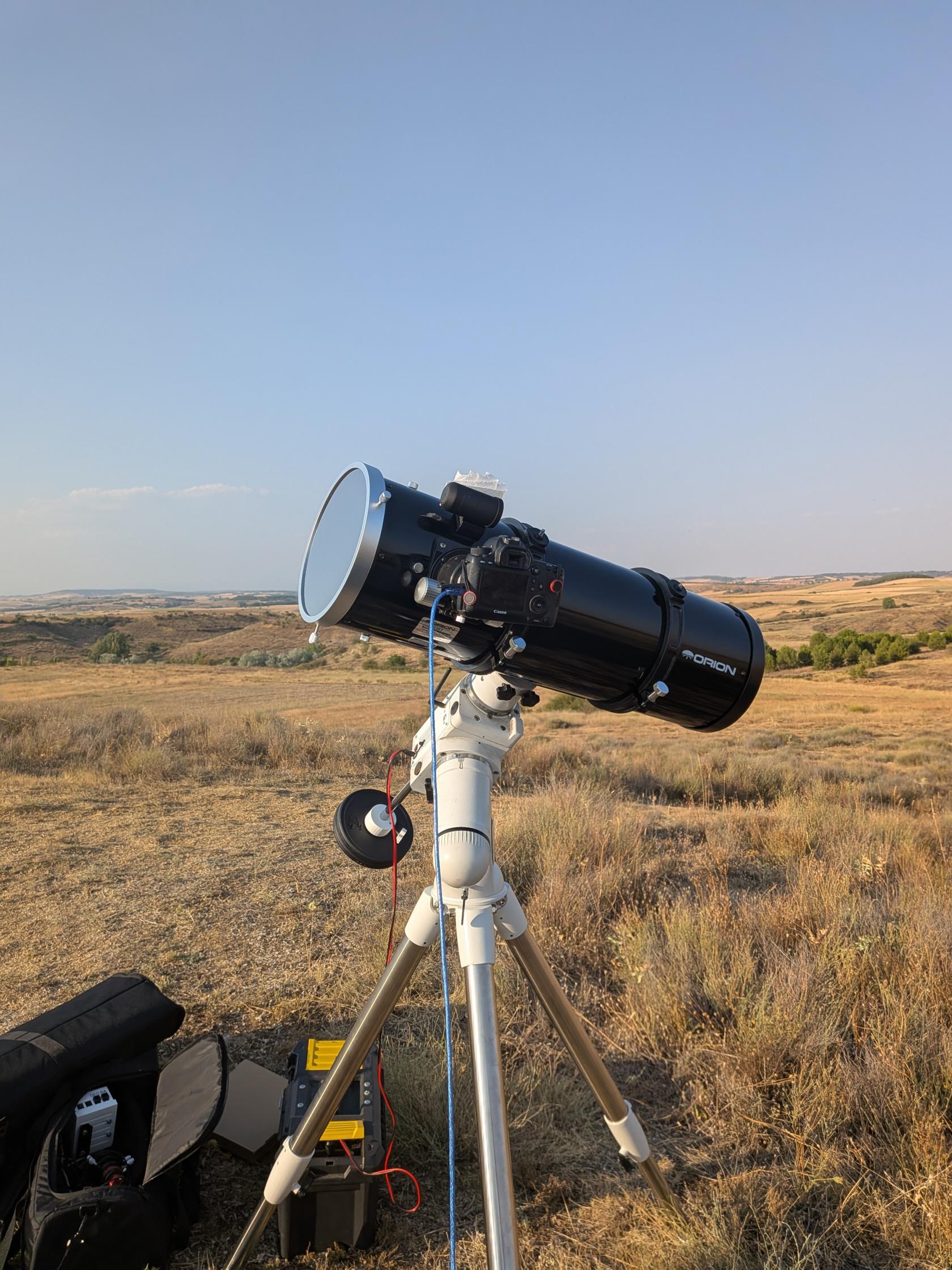
I really wanted a close-up shot of the sun to capture detail in the prominences and Baily's beads. My only option for that kind of reach was my 8-inch f/3.9 Newtonian. Normally my deep-sky scope, and total overkill for this, but it was what I had. Since the scope was too heavy for my lighter EQ5 mount, I had to bring the EQ6 instead, which meant a lot more baggage to haul along.
For the camera, I went with my Canon 6D rather than my ZWO ASI294MC Pro, since most eclipse-photography software seemed to only support DSLRs. I used an online exposure calculator to work out settings for the different phases of the eclipse. That worked fine for the partial phase, but the telescope's large aperture became a problem near totality and during totality itself since the required exposure times were faster than my camera could manage.
The fix was to stop the telescope down. By using the cap with its small removable cover open, I reduced the effective aperture to 750.5mm ÷ 55mm ≈ f/13.6, which brought the exposure times back into a workable range.
For automating the shots, I chose Solar Eclipse Timer 'n Capture (SETnC). It fit my philosophy perfectly: let the telescope handle the technical side automatically so I could actually watch the eclipse with my own eyes. Setup, testing, and use were all straightforward.
In the weeks before the trip, I printed a solar finder, which made rough framing quick and painless. Overall, dialing in the process took only a couple of afternoons. The one real unknown was the exposure timing for totality since there was no good way to test that in advance, so it came down to careful calculation, crossing my fingers, and hoping for the best.
The Road to San Isidro
As the days passed by, I kept anxiously refreshing weather forecasts, watching cloud coverage swing up and down with no clear pattern. It was nerve-wracking, but I stayed cautiously confident.
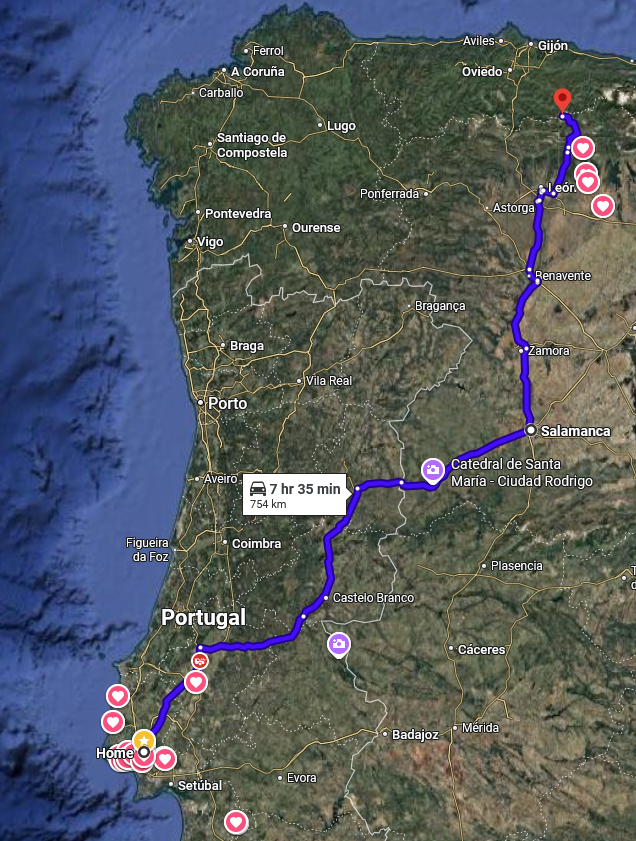
On August 11th, we finally packed the car and set off for San Isidro. We stopped in Salamanca for lunch and some sightseeing along the way. Between the stops and the driving, it ended up being a full day on the road, and we didn't arrive until close to midnight.
Eclipse Day
On the day itself, the forecast for my original chosen spot wasn't looking great. Not terrible, but any clouds at all felt unacceptable given everything I'd put into this. So I kept scanning forecasts and eventually settled on a new location in Cea, which was predicting 0% cloud coverage.
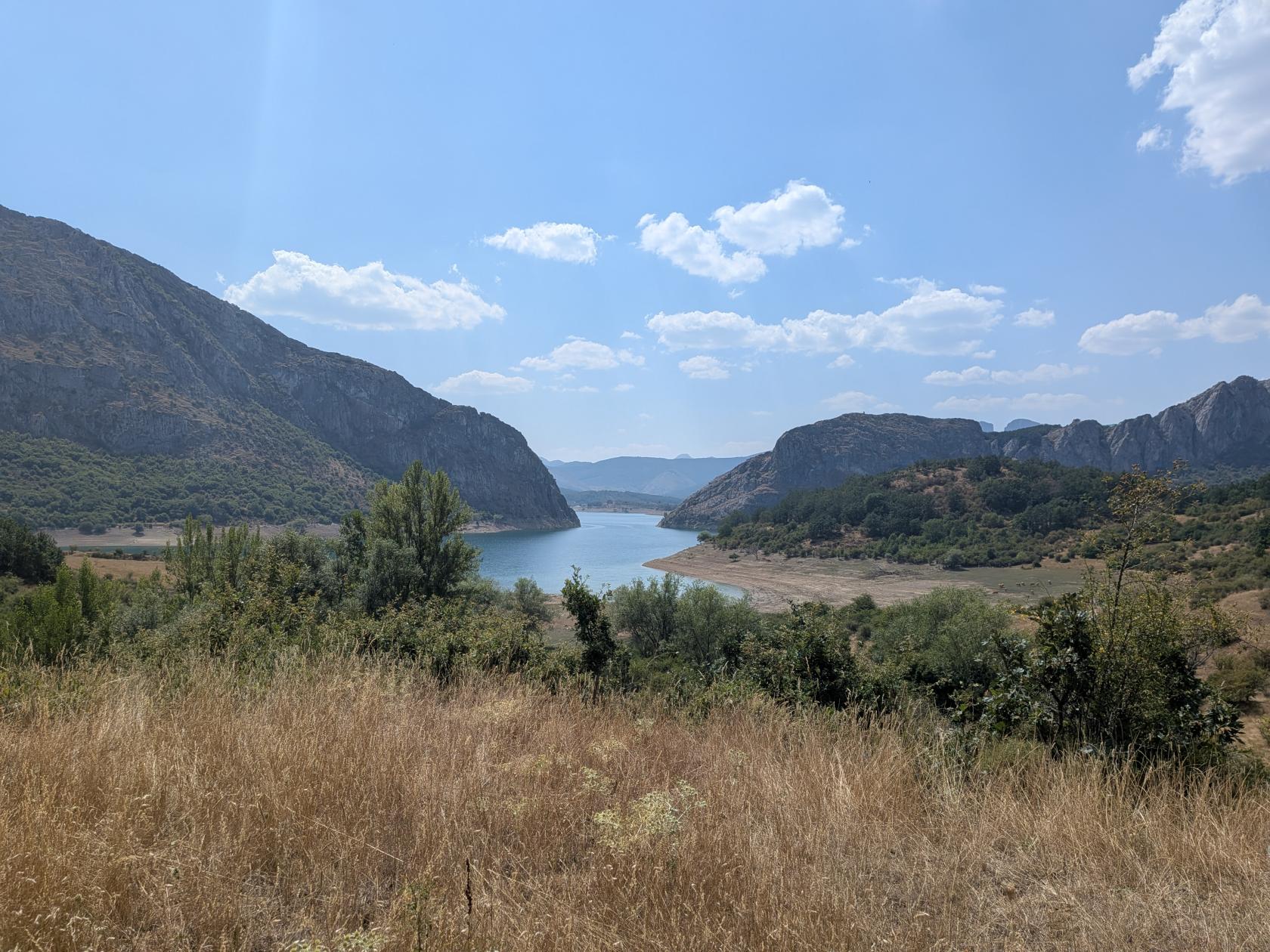
We spent the day exploring around San Isidro, stopping to take in the stunning mountain scenery. As the hours passed, we started noticing other eclipse chasers, people camping out and setting up tripods in anticipation.
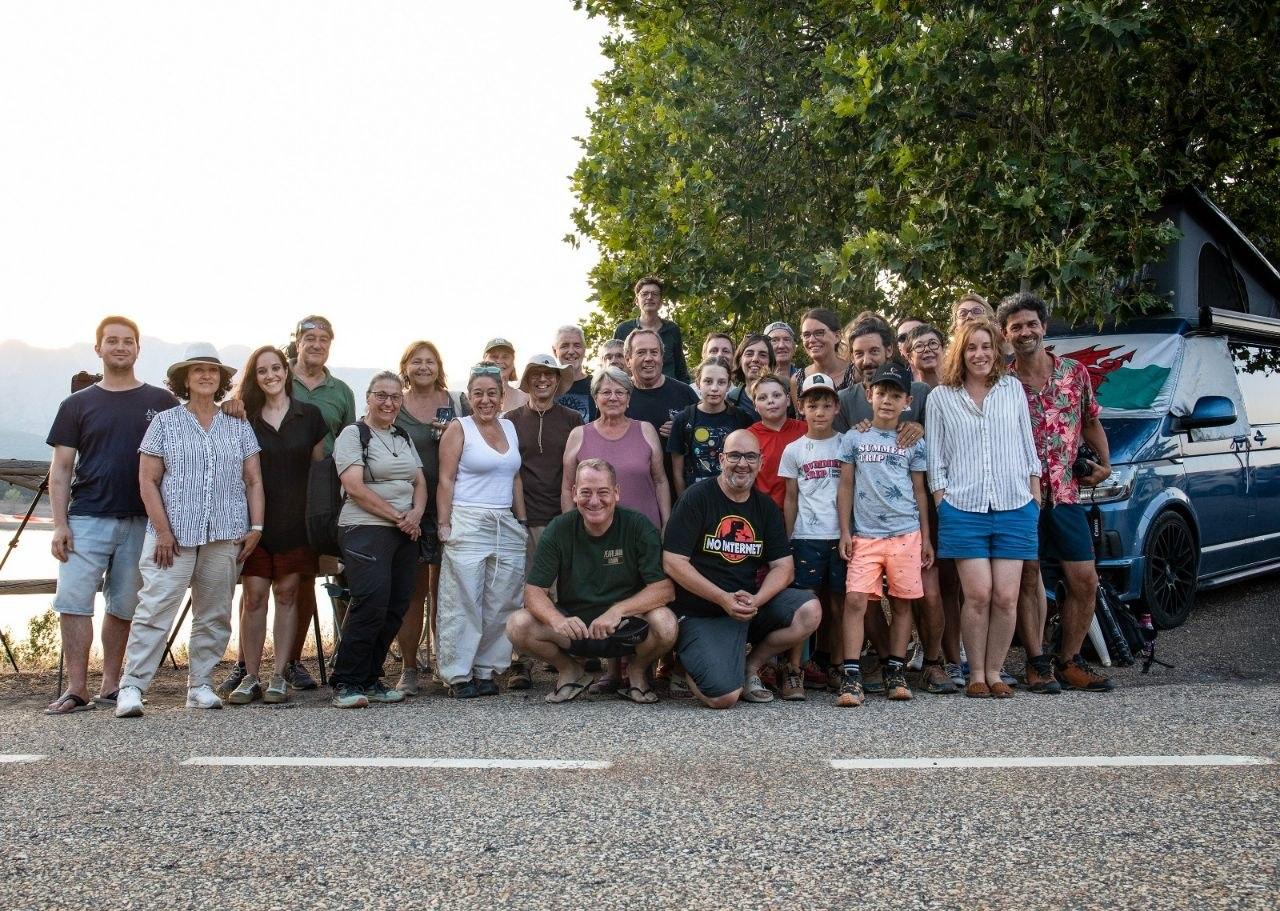
To our delight, we ran into a group of Portuguese tourists who had also made the trip specifically for the eclipse. They were incredibly warm and welcoming, invited us over for coffee, and we spent a good while nerding out together about astronomy and photography.
When we mentioned we'd forgotten our solar glasses, they didn't hesitate, they had a couple of spare pairs and gave them to us on the spot. I can't thank that group enough. They saved our eyes, and honestly, they made the whole experience even better. Maybe we'll meet them again on next year's solar eclipse?
Setting Up at the Spot
After that, we headed to the spot I'd picked. It was incredibly hot. When we arrived, a couple of people were already there. We carefully drove around bushes and tall grass to reach the highest point, where I could start setting up the gear.
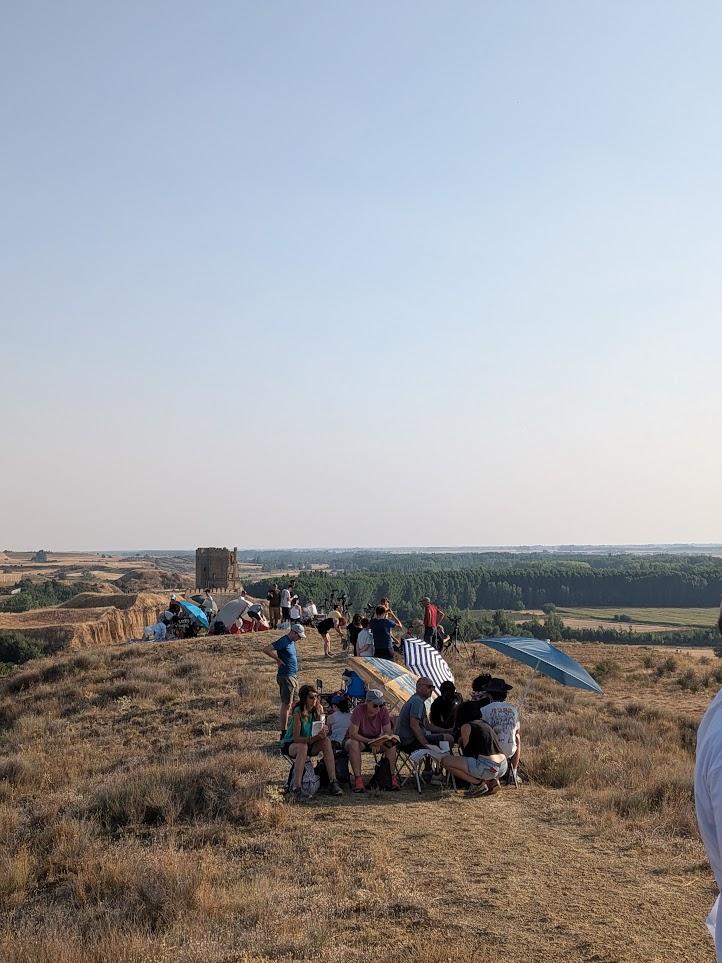
As time went on, more and more people gathered at our spot. We could hear Spanish, Portuguese, English, and French all around us. It was amazing to see so many people, from so many places, brought together by the same eclipse.
Totality
The moment was approaching, and we watched the moon and sun slowly creep together. SETnC started taking pictures on schedule. We all stared up at the sun, glasses on of course, anxiously waiting for totality.
As totality neared, SETnC's sound cue told me to remove the solar filter so it could start capturing the diamond ring and Baily's beads. From that moment on, I completely forgot about the setup.
Seeing totality with the naked eye is something else entirely. It far surpassed my expectations, and I savored every second of it. Hearing the collective gasp and awe ripple through the crowd around us made it even more unforgettable.
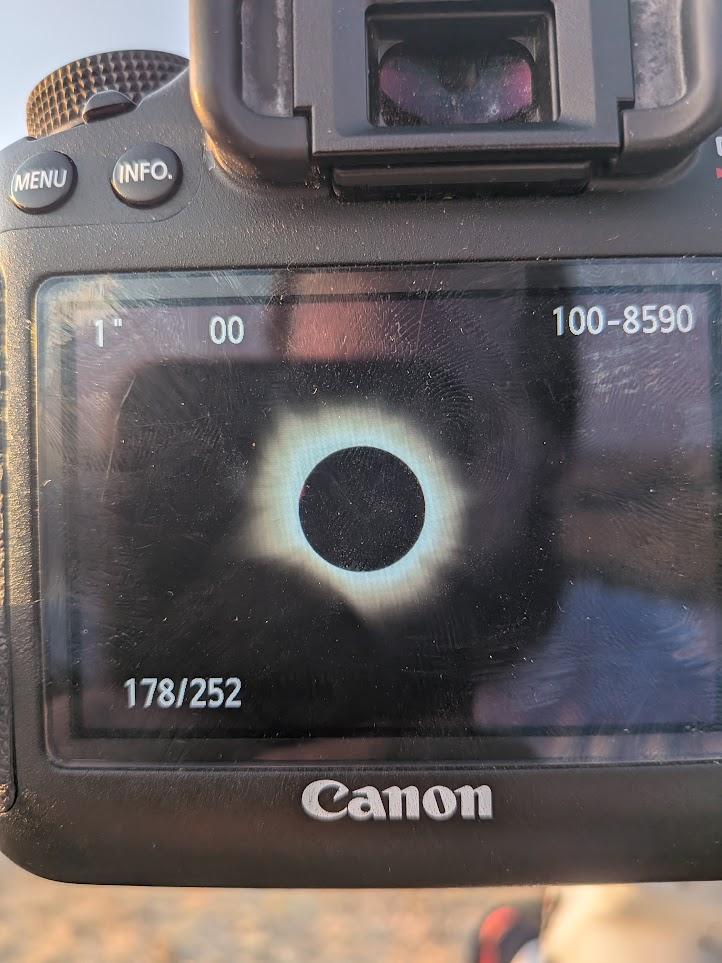
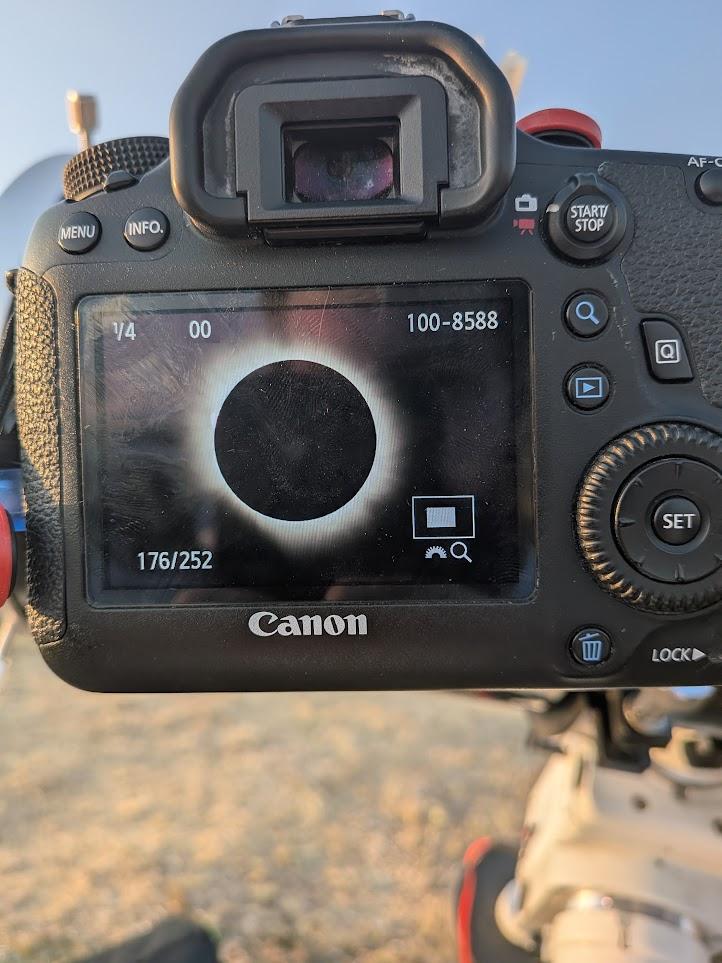
Eventually I remembered that I was also taking pictures, so I rushed over to the camera to see the results. I was in awe with the previews!
The Pictures
We couldn't stop talking about it the whole way home, still buzzing with excitement. As soon as we got back to the Airbnb, I downloaded the pictures and started going through them.
The partial phase shots were just OK, nothing too exciting. My solar filter didn't resolve much detail on the sun's surface, and the partial phase after totality came out badly underexposed, since it happened close to sunset and I hadn't accounted for that when calculating exposure times.
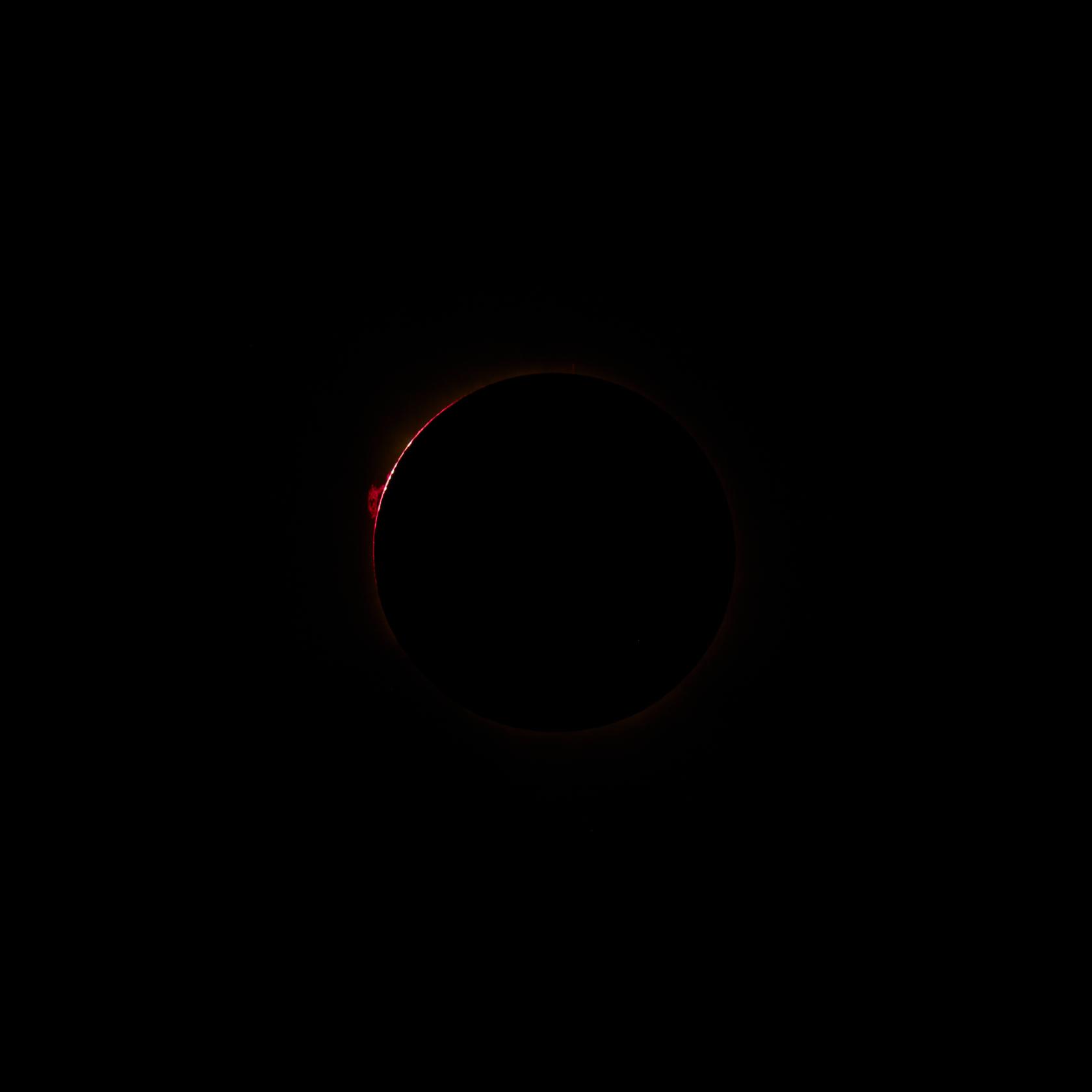
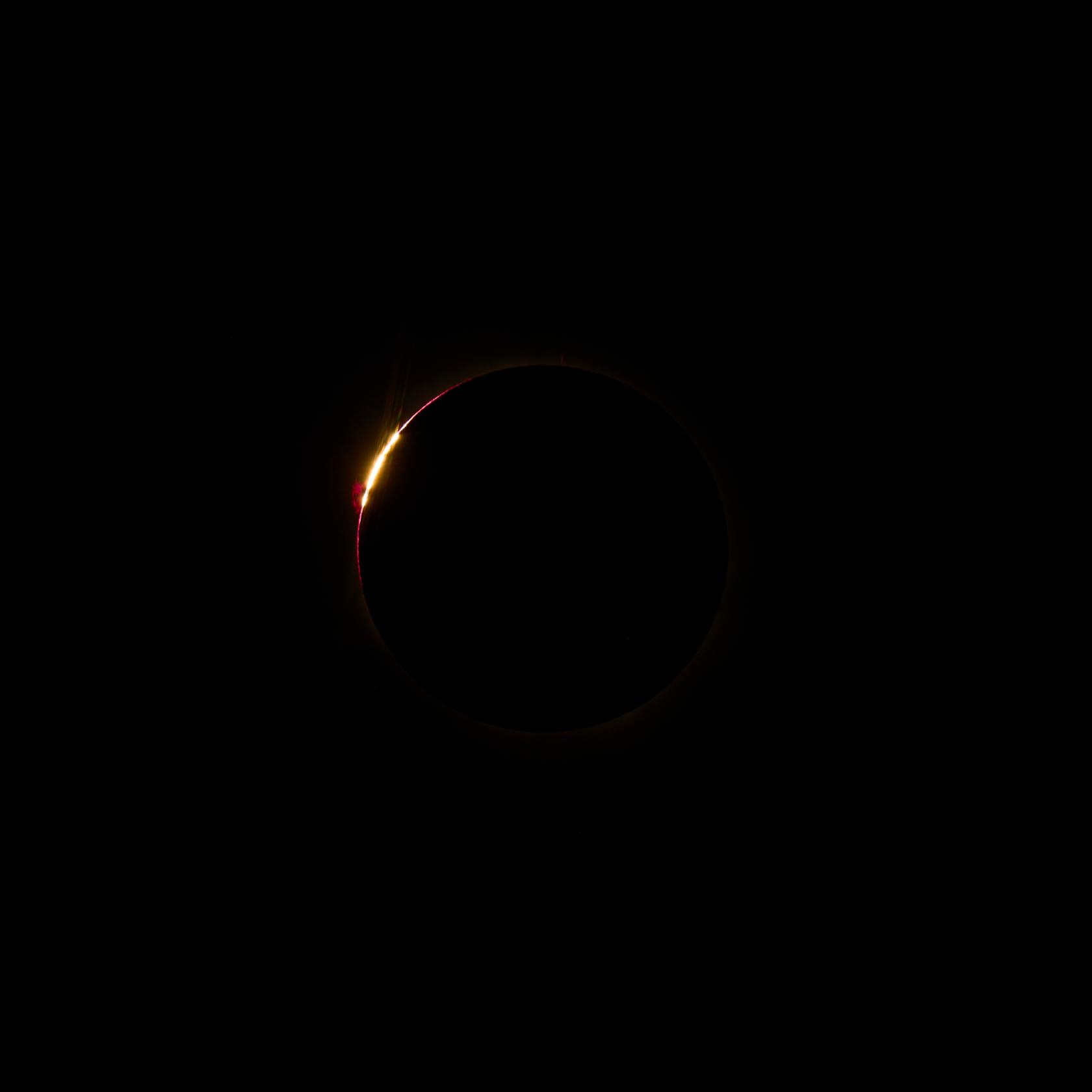
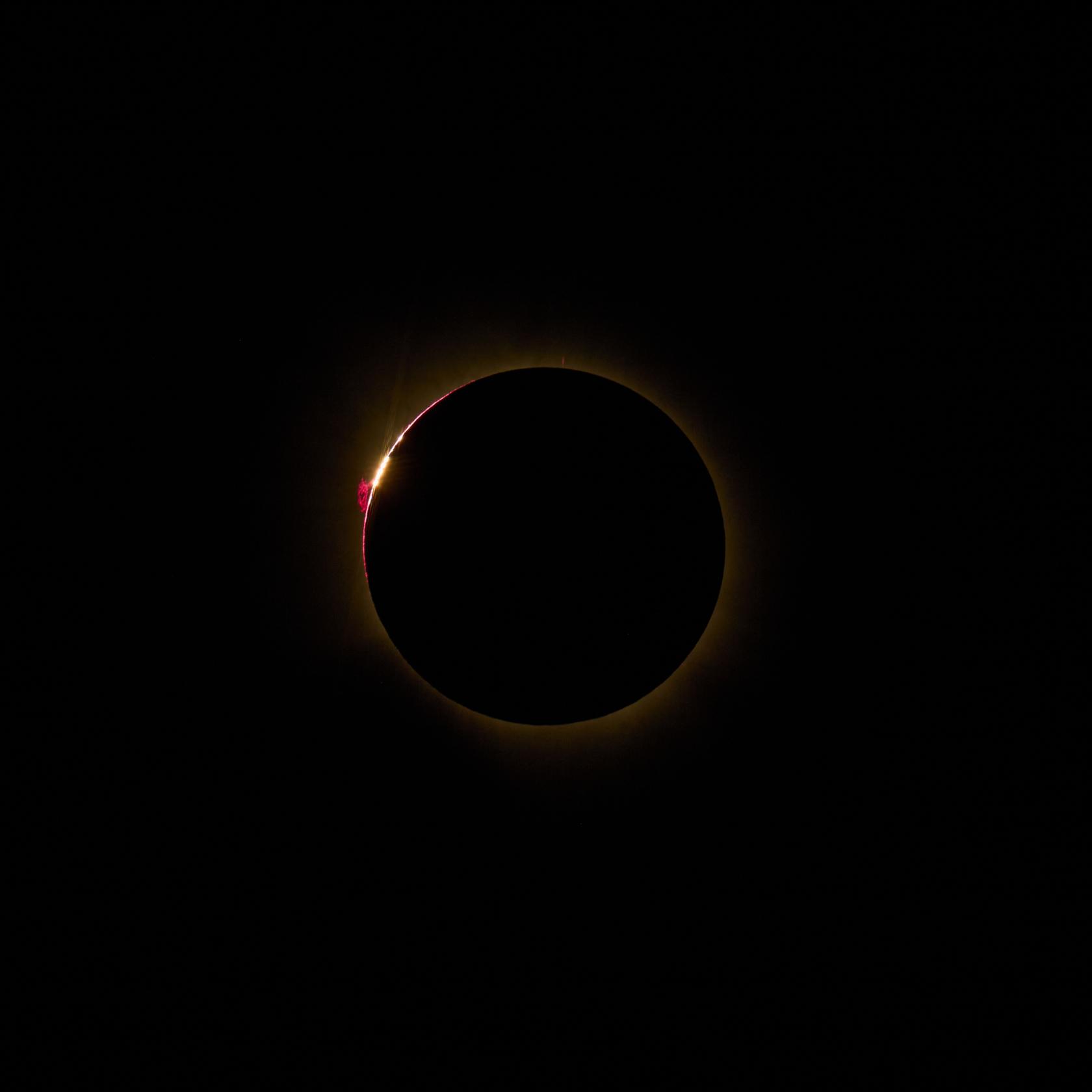
The totality and near-totality shots, though, turned out really well. I'm not sure there's any special processing technique at play. They barely needed editing to look good. Just a bit of a levels adjustment and a small saturation boost, and they were ready.
And now, for the final pictures. Drumroll, please!
Final Thoughts
Between the cancelled Airbnb, the forgotten glasses, the overkill telescope, and the last-minute location swap, nothing about this trip went quite according to plan, and yet it all somehow came together perfectly. The kindness of strangers, a bit of luck with the clouds, and a few clear minutes of totality made every bit of the stress worth it.
I'm already looking forward to the next total solar eclipse in 2027. Here's hoping the planning goes a little more smoothly next time.